
Every Central New York snow plower knows the anxiety: you're rushing to clear a parking lot before businesses open, and you wonder if one wrong move could leave you personally liable. Or worse, you discover after an accident that your personal auto policy doesn't cover commercial plowing—leaving you exposed to thousands in damages.
You worry about making the wrong insurance decision. Your biggest concern isn't just the financial hit from an accident; it's buying a policy that seems adequate but leaves critical gaps when you need it most. When policies use confusing terminology and coverage details remain murky, you're left guessing whether you're truly covered.
At the Horan insurance agency, we work with snow plowers throughout Central New York and multiple carriers to help you explore coverage options for commercial plowing operations. As an independent agency, we can discuss different approaches to insuring your truck and blade based on your specific plowing activities.
This article covers six essential steps for insuring your truck for snow plowing work in Central New York. We'll address common coverage gaps, explain what different policies actually cover, and help you understand what information carriers need to provide you with appropriate coverage.
Step 1. Get a Commercial Auto Policy
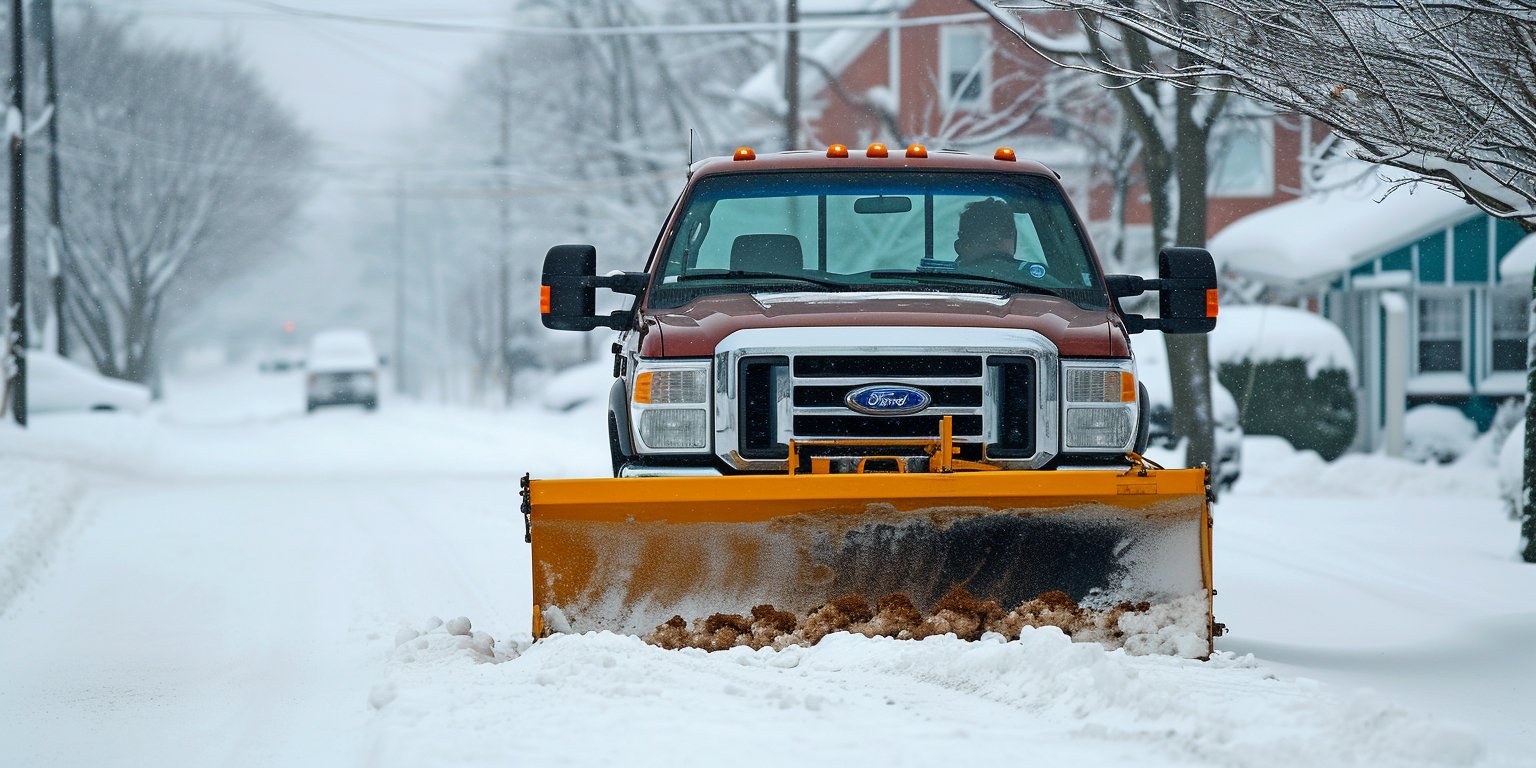
If you use your truck to plow driveways or commercial lots, you need a commercial auto policy. A personal auto policy won’t cover you if you have an accident while plowing. You’re risking a lot of trouble if you plow snow with a personal auto policy.
A commercial auto policy covers your truck as a business vehicle. It also covers the blade, the attachments, and the mechanisms that you installed on your truck.
A personal auto policy only covers your truck as it was when you bought it. It doesn’t cover any modifications or accessories that you added for plowing. You need to add accessory coverage to your commercial auto policy to cover those parts. Otherwise, you will have to pay out of pocket if they get damaged or stolen.
We discuss this a bit more in the next section.
Step 2. Add Accessory Coverage for the Blade
You also need to cover the blade and its value. The blade is the critical addition that turns your truck into a winter workhorse. You need to know the brand, make, model, year, and cost of the blade. With that info, add accessory coverage to your commercial auto policy for the blade.
Accessory coverage pays for the damage or theft of the blade and its parts.
The blade can get damaged if you hit something while plowing. It can also damage someone else’s driveway or property. You don’t want to pay for those repairs yourself. You want to get the blade fixed as soon as possible. If you have accessory coverage, you can get the blade repaired or replaced without spending too much money.
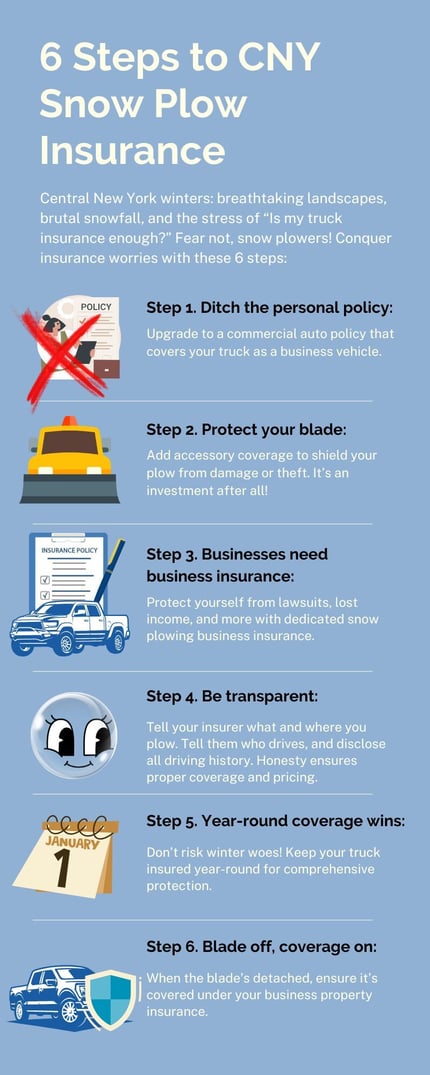 Step 3. Get Business Insurance for Snow Plowing
The truck and the blade are not the only things that need coverage. You also need business insurance for snow plowing. Business insurance helps protect you from the risks of running a snow plowing business.
For example, if someone sues you for damaging their property or injuring them, business insurance can help you pay for the legal fees and settlements. Business insurance can also cover your lost income if you can’t plow due to an accident or a weather event.
Commercial auto insurance only covers your truck and the blade. It doesn’t cover the work that you do with them. You need business insurance to cover the work that you do as a snow plower. Don’t overlook getting business insurance for snow plowing. It can save you from a lot of trouble and expense.
Step 4. Tell the Insurance Carrier What and Where You Are Plowing
The carrier needs to know some details about your plowing activities. They need to know:
- What you are plowing. Are you plowing driveways, commercial lots, or both?
- Where you are plowing. How far do you travel from your base location to plow? What is your radius of operation?
- Who your drivers are. How many drivers do you have for your truck or trucks? What are their names, ages, and driving records? Do they have any tickets or accidents?
These details affect your insurance rate. The more you plow, the further you go, and the more drivers you have, the higher your rate will be. That’s because you have more exposure to risk. You need to tell the carrier these details so they can provide you with coverage suited to your operation and price.
Step 5. Insure Your Truck Year-Round
Don’t cancel your insurance when the snow season ends. Keep your insurance on your truck all year. You never know what can happen to your truck when it’s not plowing. It could get damaged by a tree, fire, theft, or vandalism.
You don’t want to pay for those losses yourself. Having comprehensive coverage on your truck will make the difference. It pays for the damage or loss of your truck caused by something other than a collision.
If you cancel your insurance, you’ll have to go through the hassle of getting it back when the snow season starts. You might miss the opportunity to plow if a big storm comes and you don’t have insurance. You might also get in trouble if you drive your truck without insurance or registration.
Keep your insurance on your truck all year. It's safer, more economical, and more convenient in the long run.
Step 6. Insure Your Blade When it’s Off the Truck
When you take the blade off the truck, the blade is no longer covered by the commercial auto policy. The commercial auto policy only covers the blade when it’s attached to the truck. When the blade is off the truck, you need to have another way to cover it.
You can cover the blade with your business coverage. Your business coverage can include personal property coverage. This helps pay for the damage or loss of your business property, such as the blade. When getting this coverage, you need to tell the carrier the value of the blade and where you store it. You also need to secure the blade from theft or vandalism.
So, insure your blade when it’s off the truck. You don’t want to lose your blade or pay for a new one. You want to have it ready for the next snow season.
Avoid Coverage Gaps in Your Snow Plowing Operation
We covered six steps to insuring your truck for snow plowing in Central New York: getting a commercial auto policy, adding accessory coverage for your blade, securing business insurance, providing carrier details about your operations, maintaining year-round coverage, and insuring your blade during off-season storage.
Follow these steps and picture yourself plowing through a winter storm with confidence—knowing that if your blade strikes a hidden curb or if you're sued for property damage, you have coverage structured for commercial plowing work. Your business continues without interruption, and you're not scrambling to cover unexpected costs from your personal funds.
Overlook these steps and you risk operating with a personal auto policy that denies your claim mid-season, or discovering critical gaps only after an expensive accident. Without accessory coverage, a damaged $5,000 blade comes out of your pocket. Without business insurance, a single lawsuit could threaten everything you've built.
The Horan insurance agency serves snow plowers throughout Central New York. As an independent agency, we work with multiple carriers and can discuss coverage options suited to commercial plowing operations. We can help you explore different policy combinations and explain what various carriers offer based on your plowing radius, client types, and equipment value.
Click the Get a Quote button below to discuss your snow plowing insurance situation and explore coverage options for your Central New York operation.

Topics: