
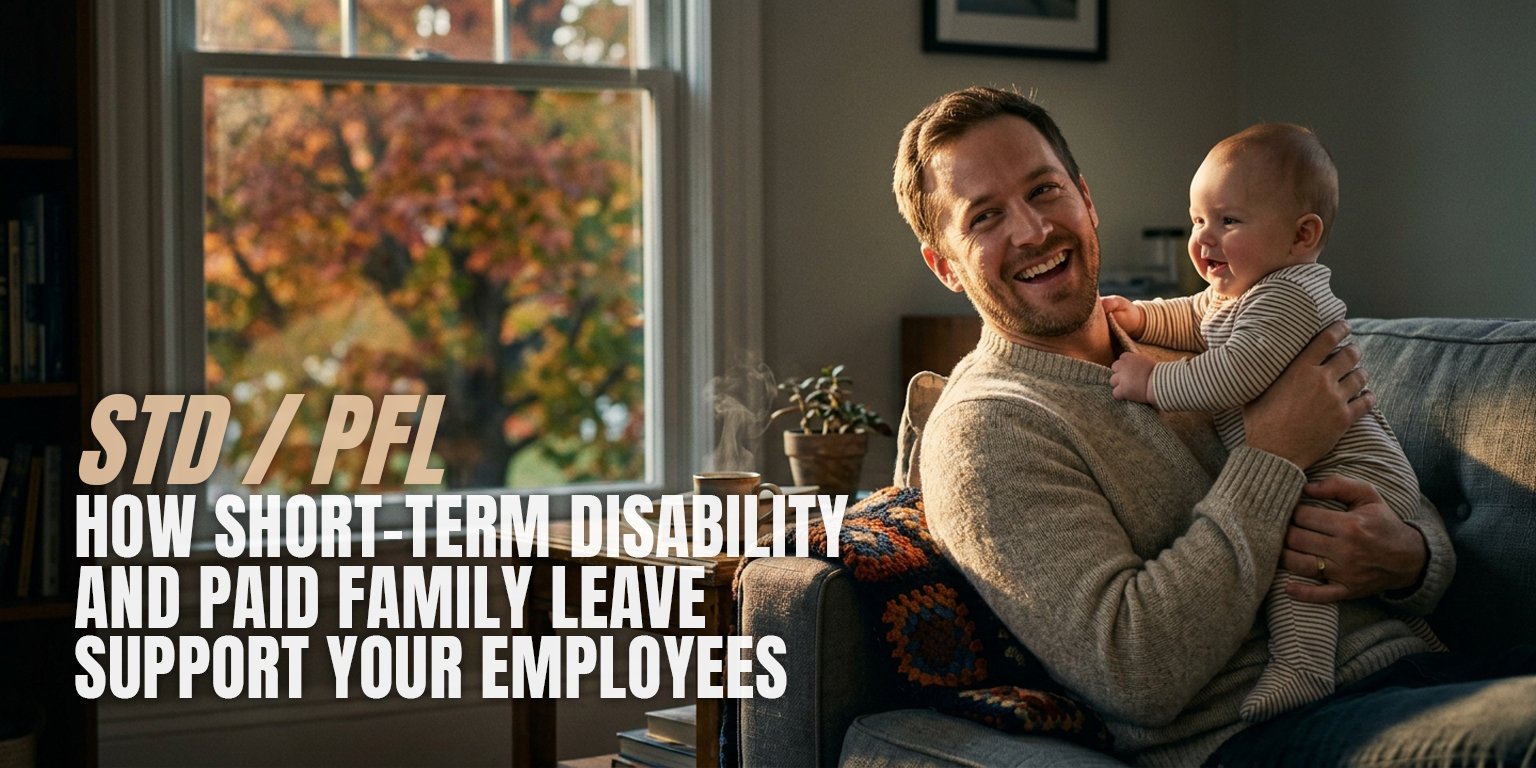
Running a Central New York business means making benefit decisions you may never have studied. Short-term disability and paid family leave come with their own rules, dollar limits, and waiting periods. The real worry isn’t the cost. It’s signing a policy that doesn’t quite fit your business and finding out later. The Horan insurance agency can help you sort through it.
We’re an independent agency that works with multiple carriers across Central New York. That gives us a view of how coverage options compare, and we can explain them in plain terms.
This article covers what each benefit does, who may qualify, and how the dollar limits work. It also looks at how both benefits affect your employees and your business.
How Short-Term Disability and Paid Family Leave Function in New York State
Short-term disability and paid family leave are two types of monetary help. They help workers needing time off from work for certain reasons. New York requires most employers to provide both benefits. Many employers buy the coverage through a carrier.
Short-Term Disability Explained
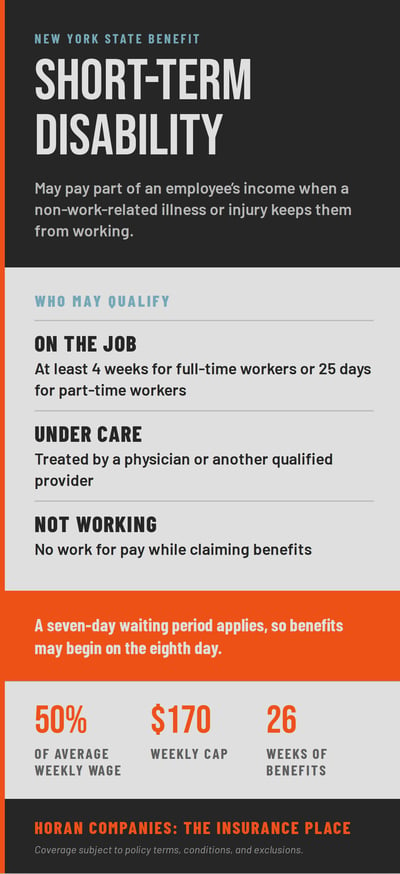
Short-term disability may pay part of an employee’s income when a non-work-related sickness or injury keeps them from working. It doesn’t apply to injuries that happen on the job. Workers’ compensation handles those, and our article on how New York workers compensation works explains that coverage.
For example, Jim lives in Liverpool and falls from a ladder while he installs flood lights at home. The fall breaks his leg and keeps him out of work. A seven-day waiting period applies, so benefits could begin on the eighth day. Jim has 30 days from the start of his disability to file his claim.
To qualify, employees have to meet the following:
- Your company has employed them for at least 4 weeks (full-time workers) or 25 days (part-time workers).
- They’re under the care of a physician or another qualified provider, such as a chiropractor or psychologist.
- They aren’t doing work for pay while they claim benefits.
In New York State, the short-term disability benefit is 50 percent of the employee’s average weekly wage, up to $170 per week. It can run for up to 26 weeks in any 52 consecutive weeks. Short-term disability and paid family leave together can’t exceed 26 weeks in that period, and an employee can’t collect both at the same time.
Employers pay most of the cost. An employer may collect a contribution from employees of up to one-half of one percent of wages, capped at 60 cents a week, but isn’t required to.
 Paid Family Leave Explained
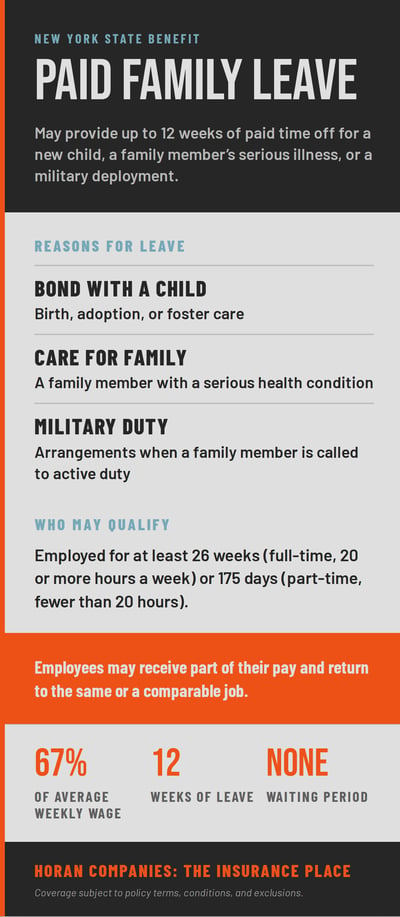
Paid family leave may provide up to 12 weeks of paid time off from work, with the ability to return to the same or a comparable job, to:
- Bond with a new child, whether by birth, adoption, or foster care,
- Care for a family member with a serious health condition, or
- Handle certain arrangements when a family member in the military is called to active duty.
For example, Julia works in Baldwinsville and gives birth to a baby. She may receive disability benefits during her recovery, then paid family leave to bond with her child. If her mother later has a serious illness, Julia may also qualify to provide care. Frank works in Camillus, and his daughter Kim is a sailor headed overseas with the Navy. Frank may qualify for leave to handle arrangements tied to her deployment.
To qualify, employees have to meet the following:
- Your company has employed them for at least 26 weeks (full-time workers) or 175 days (part-time workers).
- Full-time workers are scheduled for 20 or more hours a week. Part-time workers are scheduled for fewer than 20 hours.
Employees pay for paid family leave through payroll deductions. In 2026, the deduction is 0.432 percent of gross wages each pay period, capped at $411.91 for the year. Employers may pay the cost themselves.
In 2026, an employee who takes paid family leave may receive 67 percent of their average weekly wage, up to 67 percent of the New York State average weekly wage. For 2026, that state average is $1,833.63, so the weekly benefit caps at $1,228.53.
On January 1, 2027, the deduction rises to 0.452 percent of gross wages, and the annual cap rises to $451.81. The weekly benefit cap changes too, so check the state’s Paid Family Leave website for the current amount.
Short-term disability and paid family leave are for different reasons. Employees use short-term disability when they’re sick or hurt. They use paid family leave when they need to care for their family.
Another difference is the start of the benefits. Short-term disability has a waiting period before the benefit takes effect. Paid family leave doesn’t have a waiting period. But for both, employees must submit claim forms and provide proof of eligibility.
The Workers’ Compensation Board has more about short-term disability and paid family leave.
The Positive Effect of Short-Term Disability and Paid Family Leave on Your Employees
Short-term disability insurance can help employees with unexpected health challenges in two ways:
- Giving them supplemental money to help pay for things they need, like food, rent, or bills. The benefit replaces part of their pay, so it may be smaller than a regular paycheck.
- Helping them focus on their health to get better and return to work. Some policies may also have services that help employees with their recovery.
Paid family leave can also help employees. It lets them take time off from work and receive part of their pay when someone in their family needs care.
- They can spend time with a new baby or child that joins their family. They can also help their family members when they’re sick or hurt.
- Time at home may help families recover after a birth, an adoption, or an illness.
- Employees can have a better balance between their work and their life. Because employees can return to the same or a comparable job after leave, they may worry less about losing their jobs when they need time off. They can also keep their health insurance while they’re away, under the same terms as when they work.
What Short-Term Disability and Paid Family Leave Mean for Your Business
New York requires most employers to carry short-term disability and paid family leave coverage. Understanding how they work can help your business in these ways:
- Stay in line with state law. Employers who skip required coverage can face penalties and may have to cover claims themselves. A policy through a carrier gives you a clear way to meet the requirement.
- Know where the costs land. Employers pay most of the cost of short-term disability and may collect up to 60 cents a week from each employee. Employees fund paid family leave through payroll deductions unless the employer pays the cost. Setting those deductions at the current rate each January keeps payroll accurate.
- Handle absences with a clear process. If an employee is disabled for more than seven days, you must give them a Statement of Rights within five days of learning about the disability. Your carrier handles the claim process, which lets you plan coverage for the work while the employee is out.
- Support employee morale. Employees who know this coverage exists may feel more comfortable asking for time off when they’re sick or when family needs them. That can make conversations about leave easier for both sides.

Review Your Short-Term Disability and Paid Family Leave Coverage Before an Employee Files a Claim
We covered how short-term disability and paid family leave work, who may qualify, and how the dollar limits and payroll deductions fit together. A review before a claim arrives lets you confirm your deductions match the current rate, your notices are in place, and your team knows how to respond. Skip that review, and a claim can land while questions are still open. The delay falls on an employee who’s already out of work or caring for family.
The Horan insurance agency would like to be a resource and an advocate as you sort this out. As an independent agency working with multiple carriers across Central New York, we can show you how options compare and what each one may cover. That gives you composure and stability when the first claim form reaches your desk.
Click the Get a Quote button below to start a conversation with a licensed agent.

Topics: