
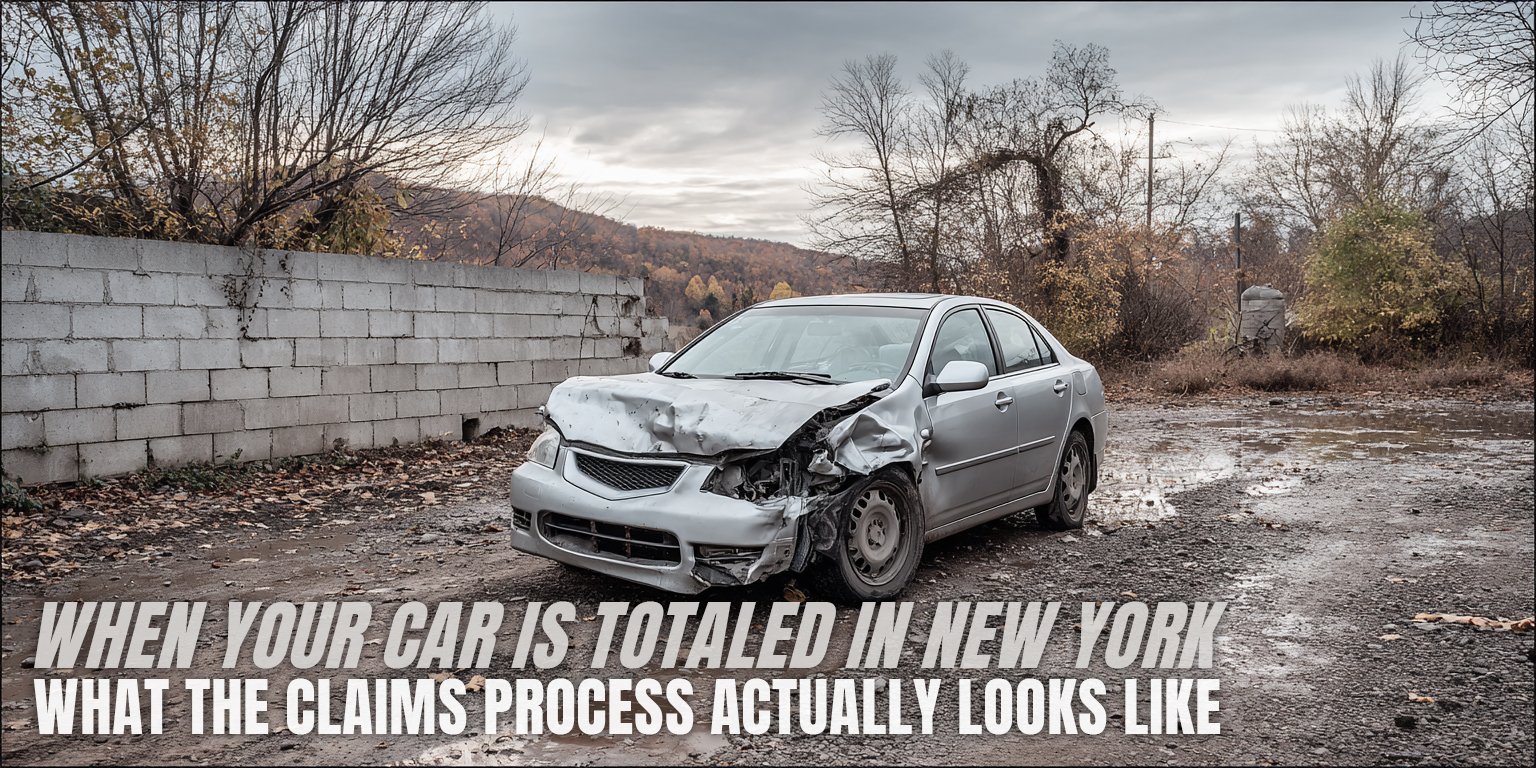
You didn't expect the call. One moment you're waiting to hear about repairs, and the next your carrier is telling you the vehicle is a total loss. For many Central New York drivers, that's where the confusion really begins — not with the accident itself, but with everything that follows.
What does the settlement figure actually mean? Can you dispute it? What happens to your loan? And what about the car — can you even keep it? These are reasonable questions, and the answers aren't always easy to find in the moment.
At the Horan insurance agency, we work with multiple carriers and see these situations play out regularly. In this article, we'll walk through how New York's total loss process works — from how your vehicle's value gets calculated to what your options are once a settlement offer lands in your hands.
How New York Determines Whether a Vehicle Is a Total Loss
New York State uses a specific threshold to define a total loss. Under New York Insurance Department Regulation 64, a vehicle is declared a total loss when the cost of repair — combined with the vehicle's salvage value — equals or exceeds 75% of the vehicle's actual cash value at the time of loss.
So if your car's actual cash value is $20,000 and the estimated repair cost plus salvage value reaches $15,000 or more, your carrier is likely to declare it a total loss rather than authorize repairs. For a closer look at how that declaration happens and why even minor damage can sometimes trigger it, we cover that ground in a separate article.
What "Actual Cash Value" Means Under Regulation 64
Actual cash value is not what you paid for the car, and it's not what you'd find on a dealer sticker. It reflects the market value of the vehicle immediately before the loss — accounting for age, mileage, condition, and comparable vehicles available in your region.
New York's Regulation 64 sets out the methods carriers must use to arrive at this figure. Insurers can use one or more of the following approaches:
- A market survey of comparable vehicles offered for sale in the local area
- A computerized valuation service that uses market data, such as those provided by CCC Intelligent Solutions or similar platforms
- A dealer quote for a comparable replacement vehicle
- An independent appraisal
If your carrier uses a computerized valuation, you're entitled to request a copy of the report along with the methodology. It's worth reviewing for accuracy — errors in vehicle condition ratings or the selection of comparable vehicles do occur.
How to Document Your Vehicle to Support a Fair Valuation
Once you know a total loss evaluation is underway, time matters. Before you surrender the vehicle or sign anything, gather documentation that supports a higher valuation.
Consider pulling together the following:
- Maintenance and service records showing recent work (new tires, a recent brake job, a timing belt replacement)
- Receipts for upgrades or aftermarket features that added value
- Photos of the vehicle's interior and exterior prior to the loss — even older photos from your phone's camera roll can help
- Any recent appraisals, especially if the vehicle had special value due to age or rarity
Hypothetically, if a driver in Baldwinsville had replaced the transmission eight months before a collision, that documented repair could support a higher valuation than a computerized system might assign based on the vehicle's age alone.
Disputing a Valuation You Believe Is Too Low
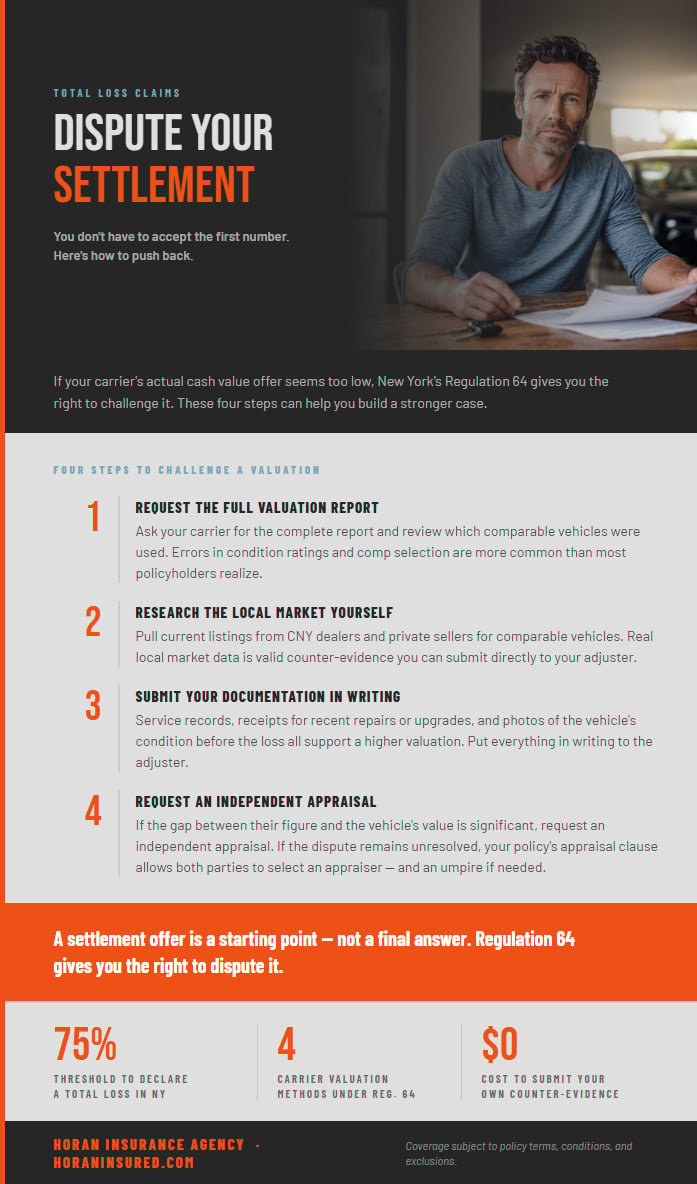
If you receive a settlement offer and believe the actual cash value is understated, you're not required to accept the first number. Regulation 64 gives you a defined window from the date of the offer to dispute it — check your settlement paperwork and your policy for the specific timeframe, as these details can vary.
To challenge the valuation, you can:
- Request the full valuation report and review the comparable vehicles used
- Research comparable vehicles in the Central New York market yourself — listings from local dealers and private sellers can serve as counter-evidence
- Submit your documentation (service records, receipts, photos) to the adjuster in writing
- Request an independent appraisal if the gap between their figure and the vehicle's value seems significant
If the dispute remains unresolved, New York allows for an appraisal process where both parties select an appraiser and, if needed, an umpire to resolve the difference. Your policy documents will describe the specific appraisal clause that applies.
What Happens to Your Loan or Lease Balance
A total loss settlement is based on what the vehicle was worth — not what you owe on it. If you financed the car and your loan balance exceeds the actual cash value, you'll be responsible for covering the gap out of pocket unless you have gap coverage on your policy.
Gap coverage addresses the difference between what the insurer pays and what remains on your loan or lease balance. Not every auto policy includes it automatically. If you're unsure whether yours does, our article on how gap insurance works covers the specifics.
If you lease your vehicle, the process involves a third party: the leasing company. Your carrier will generally pay the leasing company directly up to the vehicle's actual cash value, and your lease agreement determines what happens next. Contact your leasing company early in the process.
Can You Keep the Vehicle After a Total Loss?
In New York, you can elect to retain a totaled vehicle after the settlement. If you do, the insurer deducts the salvage value from your settlement payment — because you're keeping an asset that retains some value.
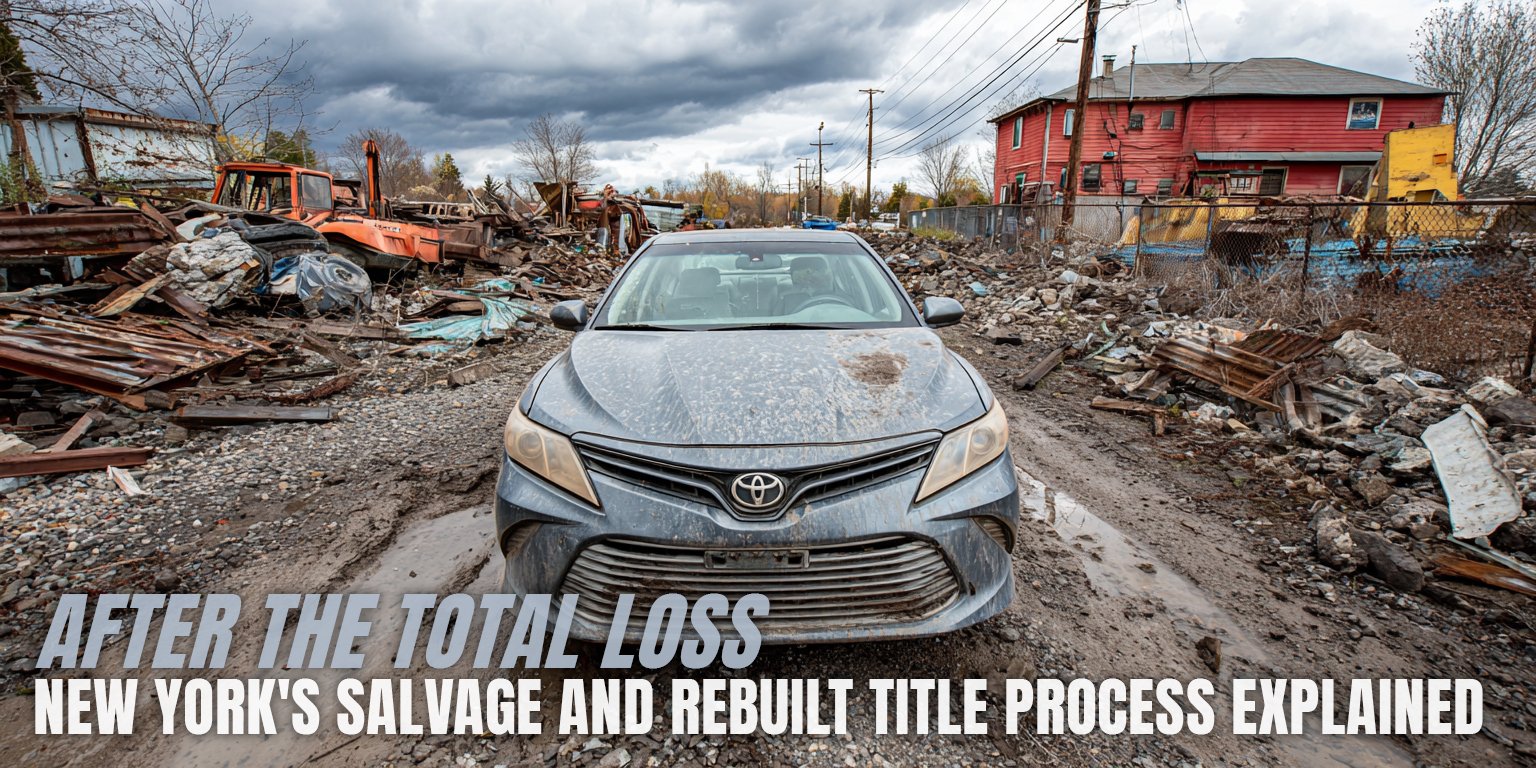
Once you retain a totaled vehicle, the New York State Department of Motor Vehicles requires a salvage title. A vehicle with a salvage title cannot legally be driven on New York roads until it passes a physical inspection and is issued a rebuilt title through the DMV's salvage vehicle inspection program.
Retaining the vehicle does not mean you can drive it. The rebuilt title process involves inspection at a designated DMV facility, and some insurers are reluctant to provide full comprehensive or collision coverage on a rebuilt vehicle afterward.
Sales Tax and Registration Fees Are Part of Your Settlement
One detail many policyholders overlook: under Regulation 64, your total loss settlement must include New York State sales tax on the actual cash value, as well as the prorated unused portion of your registration and title fees. These aren't optional — they're part of what the carrier is required to include.
If the settlement offer you receive doesn't reflect sales tax, ask about it directly. It should appear as a line item.
Moving Toward a Replacement Vehicle
Once the settlement is finalized, you'll need to transfer the title to the insurer — or arrange a salvage transfer if you're retaining the vehicle. At that point, your coverage on the totaled vehicle ends.
If you're financing or leasing a replacement, reaching out to your agent before finalizing a purchase can help you avoid a coverage gap. New York requires continuous coverage, and there are short windows — typically 14 days for added vehicles under most policies — to get a replacement properly listed on your policy.
For guidance on the coverage side of the transition, our articles on removing a vehicle from your policy and switching carriers cover relevant ground.
Don't Navigate the Total Loss Process Alone
A total loss declaration is stressful enough on its own. But the policyholders who come out of it in the strongest position are the ones who understood the process before they were in the middle of it — who knew to document their vehicle, review the valuation, ask about sales tax, and check their loan balance against their coverage.
Without that knowledge, it's easy to accept a settlement that shortchanges you, miss a step in the title process, or find yourself making loan payments on a car you no longer have.
At the Horan insurance agency, we work with multiple carriers and see how these claims unfold for Central New York drivers. We can discuss your current coverage, help you understand what your policy actually provides, and make sure you're not left with unanswered questions when it matters most.
Click the Get a Quote button below to reach our team.

Topics: