
Running a business in Central New York means managing risk while keeping operations running smoothly. When property damage occurs, the type of coverage you carry determines whether you receive funds to replace damaged items with new equivalents or only their depreciated value. This difference can mean thousands of dollars and weeks of interrupted operations.
At the Horan insurance agency, we work with Central New York business owners to explore coverage options from multiple carriers. We can help you understand how replacement cost and actual cash value coverages may affect your business after a loss.
This article examines how these two coverage types work in commercial policies, the financial impact each has on business recovery, and scenarios where the difference between them becomes critical for your operations.
How Replacement Cost and Actual Cash Value Coverage Work in Commercial Policies
Your commercial property policy covers damage to buildings, equipment, and inventory through one of two valuation methods.
- Replacement cost coverage pays to replace damaged property with new items of similar kind and quality. If a 10-year-old commercial oven is damaged beyond repair, replacement cost coverage provides funds to purchase a new oven with similar capabilities. However, the insurance company typically pays the depreciated value first, then reimburses the difference once you provide receipts showing you've replaced the item.
- Actual cash value coverage pays the current market value of damaged property after accounting for age, condition before the loss, expected useful life, and market value of similar used items. That same 10-year-old commercial oven might cost $25,000 to replace new, but actual cash value coverage might only provide $12,500 after depreciation—leaving you to cover the remaining $12,500 from business funds.
The Business Impact Gap: When Depreciation Affects Operations and Cash Flow
The financial gap between replacement cost and actual cash value becomes more significant in commercial settings than residential ones, affecting both immediate recovery and ongoing operations.
Consider a Cicero manufacturing facility with specialized equipment. A fire damages a CNC machine purchased 8 years ago for $80,000. Replacement cost coverage provides funds for a new $85,000 machine (accounting for price increases). Actual cash value coverage might only provide $35,000, leaving the business to fund the remaining $50,000.
This $50,000 gap creates multiple operational challenges. Most businesses operate on tight margins, making it difficult to find working capital for unexpected equipment purchases. The business must then either apply for additional financing, negotiate payment plans with equipment vendors, or delay equipment orders while raising funds—all of which extend downtime.
While your business scrambles to replace equipment and restore operations, competitors continue serving your customers. Extended downtime can result in permanent customer loss.
 Commercial Property Scenarios Where Coverage Type Matters Most
Different business operations face unique challenges with actual cash value coverage based on their equipment needs and replacement timelines.
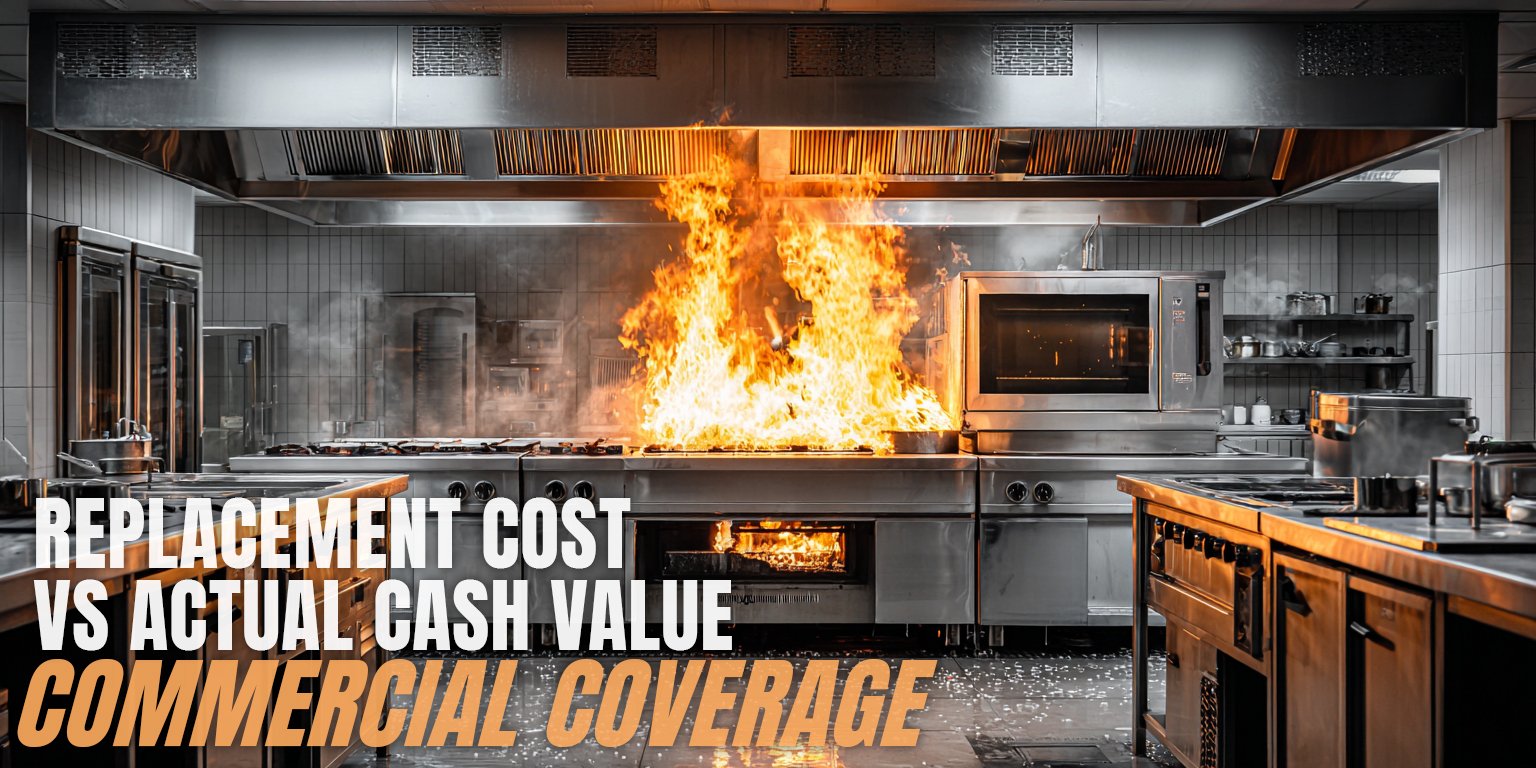
Restaurant and food service operations in Syracuse or Liverpool rely on commercial kitchen equipment that depreciates quickly but remains expensive to replace. A 15-year-old walk-in cooler might have little actual cash value but costs $30,000 or more to replace.
Actual cash value coverage leaves restaurant owners facing tough choices between paying for replacement out-of-pocket or closing permanently. Similar challenges exist with commercial refrigeration units, industrial ovens and ranges, hood systems and fire suppression equipment, and point-of-sale systems.
Contractors and skilled trades depend on specialized tools and equipment. A Baldwinsville electrical contractor with wire-pulling equipment, testing devices, conduit benders, and diagnostic tools sees these items depreciate through daily use. A 5-year-old wire puller or testing device faces significant depreciation under actual cash value coverage. Tool replacement delays directly impact the ability to serve customers and generate revenue.
Retail businesses maintain inventory that depreciates from the moment it enters the store. A Fayetteville retail shop carrying seasonal merchandise faces depreciation on inventory even before a loss occurs. Actual cash value settlements may not provide sufficient funds to restock shelves at current wholesale prices.
Office-based businesses in downtown Syracuse invest in furniture, computers, servers, and telecommunications equipment. While these items may seem less critical than production equipment, actual cash value depreciation can leave businesses unable to afford replacements that meet current technology standards or support remote work capabilities.

Additional Coverage Options That Support Business Recovery
Beyond choosing between replacement cost and actual cash value, other coverage features can affect your recovery after a loss.
Some New York insurance carriers offer agreed value coverage for specialized equipment. This approach establishes the equipment's value when you purchase the policy, eliminating depreciation disputes at claim time. For businesses with unique or custom equipment, agreed value coverage provides more certainty about post-loss recovery costs.
Business interruption insurance works alongside property coverage but doesn't eliminate the challenges of actual cash value depreciation. Business interruption coverage may replace lost income during the recovery period, but if equipment replacement takes longer due to funding shortfalls, your business interruption limits might expire before operations resume.
Making Coverage Decisions That Support Your Business Operations
Understanding replacement cost versus actual cash value helps you evaluate coverage options. However, your decision should consider:
- Equipment age and condition
- Replacement cost of critical items
- Available business capital reserves
- Revenue impact of extended downtime
- Financing options for equipment replacement
The premium difference between replacement cost and actual cash value coverage varies based on your business type, equipment values, and claims history. Some businesses find the additional premium worthwhile for the coverage certainty it provides. Others might combine actual cash value coverage on some property with replacement cost coverage on critical equipment.
Commercial property insurance decisions affect your ability to recover from loss and maintain operations. The Horan insurance agency can help you explore coverage options from different carriers and discuss how each approach may work for your business situation.
Click the Get a Quote button below to learn more about commercial property coverage options or to discuss your specific business insurance considerations.

Topics: