
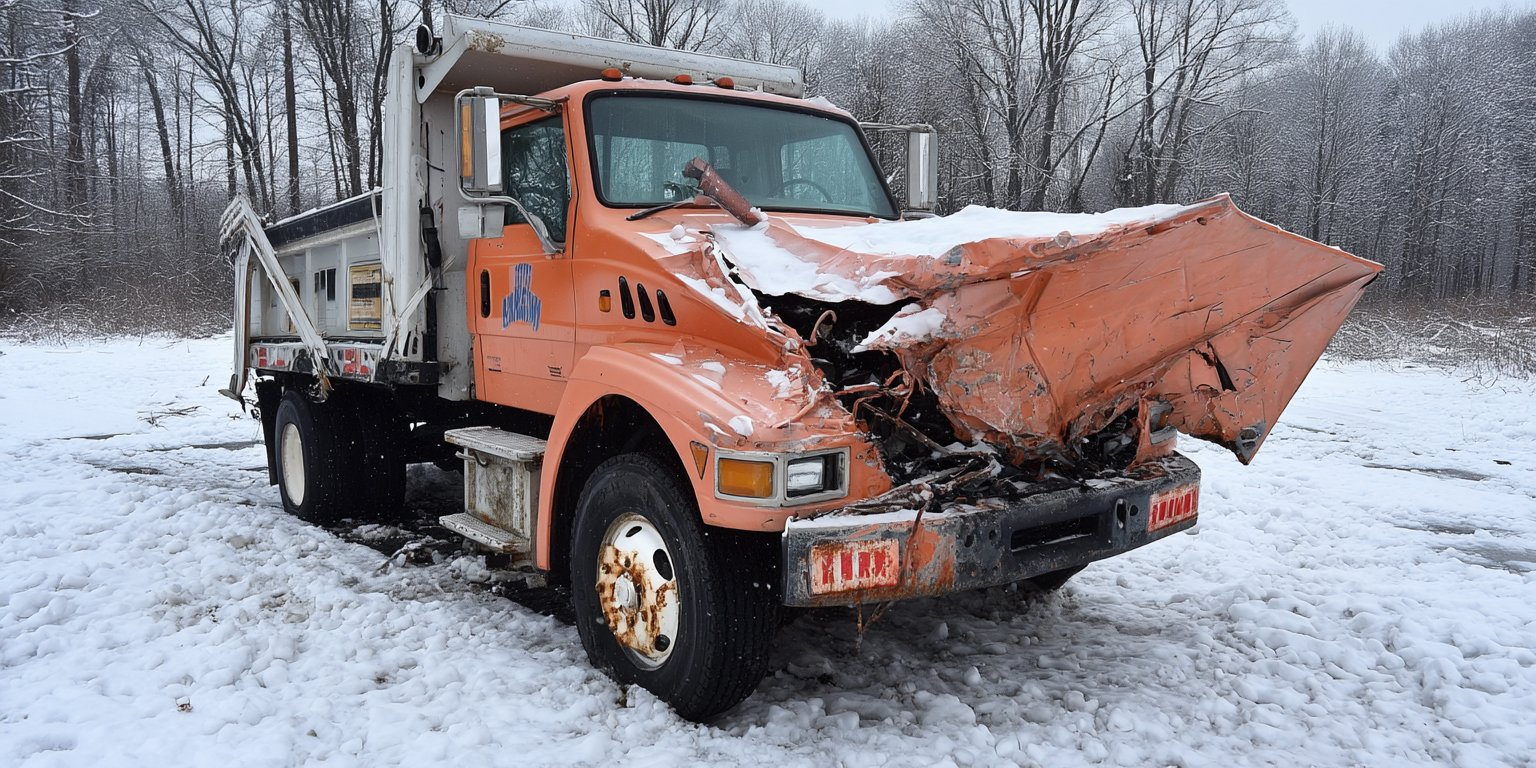
You've invested in commercial snow plowing equipment, built a client base throughout Central New York, and understand the liability risks that come with clearing parking lots and driveways. What you might not realize is how quickly a single incident can escalate into tens of thousands of dollars in costs—and how many of those costs fall outside standard coverage.
The worry isn't just about having an accident. Your bigger concern is discovering after an incident that your policy doesn't address the specific type of claim you're facing, leaving you personally responsible for damages, legal fees, and lost business income while the claim resolves.
At the Horan insurance agency, we work with snow plowers throughout Central New York and multiple carriers to help you explore coverage options for commercial plowing operations. As an independent agency, we can discuss how different policy structures respond to various claim scenarios.
This article examines real claim costs from snow plowing incidents in Central New York, compares outcomes for operators with different coverage levels, and shows why understanding these costs before you face a claim matters for your operation's financial stability.
What Property Damage Claims Actually Cost When Your Blade Hits Something
When your plow blade strikes a hidden curb in a Baldwinsville shopping center parking lot and damages the concrete edging, you might expect a bill for a few hundred dollars in repairs. The actual cost often exceeds $3,000—typically $2,400 for concrete replacement—and $600 for repainting parking space lines affected by the repair work.
If you back into a storefront while maneuvering in a tight Liverpool strip mall parking lot and shatter the plate glass window, costs escalate quickly. Property damage claims for commercial glass in Central New York typically include:
- Emergency board-up services: $400-$800
- Custom plate glass replacement: $3,500-$6,000
- Frame repair or replacement: $1,200-$2,500
- Interior damage from weather exposure: $800-$2,000
- Business interruption claim from property owner: $2,000-$5,000
A single storefront glass incident can generate claims between $7,900 and $16,300.
Commercial general liability insurance can help address these property damage claims. The policy responds to covered claims for property damage you cause to others, subject to your policy limits.

How Vehicle and Equipment Damage Affects Your Operating Costs
Your commercial auto policy addresses damage to your truck and blade, but understanding how coverage applies prevents surprises when you file a claim.
Take our resident CNY snow plower, Phil. He backs into a light pole while clearing a Syracuse medical office parking lot at 4 a.m. The impact damaged the truck's tailgate ($1,800), rear bumper ($900), and the blade's hydraulic mounting system ($2,200). Total damage: $4,900.
With a $1,000 collision deductible on his commercial auto policy, Phil paid $1,000 and his carrier addressed the remaining $3,900. However, the truck remained out of service for eight days during repairs. Without a rental vehicle endorsement on his policy, he paid $95 per day for a rental truck with snow plowing capabilities—an additional $760 he hadn't budgeted.
If your blade sustains damage while not attached to your truck—such as when it's stored in your garage during off-season—your commercial auto policy typically doesn't respond. You need inland marine coverage or a business property policy to address equipment damage when it's not mounted on the vehicle.
A plower in Cicero might learn this if a tree were to fall on his stored blade during a summer storm. The $5,000 blade replacement comes entirely from his own funds because he assumed his truck insurance addressed the blade regardless of where it was located.
 The True Cost of Injury Claims on Recently Plowed Property
Slip-and-fall claims create some of the most expensive scenarios for snow plowers. Even when you've properly cleared a lot, injury claims can arise—and New York's legal environment means these claims often result in lawsuits rather than quick settlements.
Say a customer slips on black ice in a Camillus strip mall parking lot 30 minutes after plowing was completed. She fractured her wrist and filed a claim against both the property owner and the snow plowing contractor. The claim alleged the plower should have applied salt or identified the icy conditions.
Legal defense costs alone reached $18,000 before the case settled. The settlement amount was $45,000 for medical expenses, lost wages, and pain and suffering. Total cost: $63,000.
The plower's general liability policy with $1 million per occurrence limits addressed both the defense costs and settlement. However, his premium increased by $2,800 annually for the next three years—an additional $8,400 in indirect costs from a single claim.
An underinsured scenario shows the problem more clearly. If that same plower had carried only $300,000 in liability coverage (the minimum many small operators start with), his policy would have covered the settlement up to that limit.
However, with a $45,000 settlement and $18,000 in defense costs totaling $63,000, he would still have been within his limits. The real risk with lower limits comes when claims exceed the policy maximum—leaving the operator personally responsible for any amounts beyond their coverage.
When Legal Defense Costs Exceed the Actual Damages
Many Central New York snow plowers don't realize that legal defense costs apply separately from—or sometimes count toward—policy limits, depending on how the policy is structured.
Let’s look at another scenario. A Manlius snow plowing contractor faced a lawsuit after a commercial property owner claimed the contractor damaged newly installed landscaping while clearing snow. The property owner sought $12,000 in damages. The contractor believed the claim was without merit. His insurance carrier evaluated the case and determined there was sufficient basis to contest the allegations in court.
The case went through 18 months of legal proceedings. Attorney fees, expert witness costs, and court fees totaled $28,000. The jury ultimately ruled in favor of the contractor—no damages were awarded. However, the contractor's general liability policy was structured with "defense costs within limits," meaning the $28,000 in legal fees counted against his $500,000 policy limit.
Had another claim occurred during those 18 months, his available coverage would have been reduced to $472,000. If the jury had ruled against him and awarded the full $12,000, he would have had $460,000 in remaining coverage—after spending $28,000 to defend a $12,000 claim.
Policies with "defense outside limits" structures handle this differently. Defense costs are paid in addition to policy limits, meaning a $500,000 policy remains fully available for settlements or judgments even after the carrier spends money on legal defense.
Understanding which structure your policy uses helps you evaluate whether your limits provide adequate coverage when legal defense becomes necessary.
 What Business Interruption During Claims Resolution Costs Your Operation
When your truck sustains major damage in an accident, the time it takes to resolve the claim and complete repairs directly affects your ability to serve clients and generate revenue.
Say aSolvay-based snow plower hit a concrete barrier in a Syracuse parking garage, causing $7,500 in damage to the truck and plow assembly. The commercial auto carrier approved the claim within three days, but parts availability delayed repairs for two weeks.
During those two weeks, three significant snowfalls occurred. The operator's contracts required a response within four hours of snowfall. Unable to fulfill contracts without the truck, he:
- Lost $4,200 in plowing revenue from existing contracts
- Paid $800 in penalties for late response under contract terms
- Faced cancellation of two seasonal contracts worth $6,000 total
The insurance claim addressed the vehicle damage. It didn't address lost business income, contract penalties, or cancelled agreements. Business interruption coverage—an optional endorsement on commercial policies—can help cover lost income during periods when covered claims prevent normal operations.
This operator didn't carry business interruption coverage. The vehicle damage claim cost his carrier $6,500 (after his $1,000 deductible). The business impact cost him $11,000 in lost revenue and penalties—more than the actual vehicle damage.
Comparing Adequately Insured vs. Underinsured Claim Outcomes
Two Central New York snow plowers experienced similar incidents with dramatically different financial outcomes based on their coverage structures.
Scenario 1: Adequately Insured Operator
A Liverpool contractor's blade struck an unmarked gas meter while clearing a commercial lot. The impact ruptured a gas line, requiring emergency utility response, property evacuation, and repairs.
Coverage in place:
- Commercial general liability: $2 million per occurrence
- Commercial auto: $1 million combined single limit
- Business interruption coverage: $5,000 per month, 3-month maximum
Costs incurred:
- Emergency gas company response: $8,500
- Property evacuation costs: $3,200
- Gas line repair: $12,000
- Damaged pavement restoration: $4,800
- Legal defense (property owner sued): $15,000
- Settlement to property owner: $25,000
- Truck repairs: $3,600
- Lost income during 3-week truck repair: $4,500
- Total costs: $76,600
Insurance addressed:
- General liability covered emergency response, property damage, legal defense, and settlement: $63,500
- Commercial auto covered truck damage: $2,600 (after $1,000 deductible)
- Business interruption covered lost income: $4,500
Out-of-pocket costs to operator: $1,000 (commercial auto deductible only)
His business continued operating financially intact. Premium increases over three years cost an additional $4,200, but the claim didn't threaten his operational viability.
Scenario 2: Underinsured Operator
A Fulton contractor experienced a nearly identical incident—blade struck a gas meter, ruptured line, required emergency response.
Coverage in place:
- Commercial general liability: $500,000 per occurrence
- Commercial auto: $100,000 combined single limit (with $1,000 collision deductible)
- No business interruption coverage
Same costs occurred: $76,600 total
Breakdown of costs:
- GL-covered costs (emergency response, property damage, legal defense, settlement): $68,500
- Commercial auto costs (truck repairs): $3,600
- Lost income during 3-week repair: $4,500
Insurance addressed:
- General liability covered all emergency response, property damage, legal defense, and settlement costs: $68,500 (within his $500,000 limits)
- Commercial auto paid: $2,600 (truck repairs of $3,600 minus $1,000 collision deductible)
- Business interruption: $0 (no coverage)
Out-of-pocket costs to operator:
- Commercial auto collision deductible: $1,000
- Lost income during repairs: $4,500
- Total immediate out-of-pocket: $5,500
However, the larger problem was his remaining coverage for the rest of the policy year. After the $68,500 claim, he had only $431,500 in general liability coverage remaining until his policy renewed. Had another significant claim occurred before renewal, he would have had limited coverage available. Additionally, he had no way to replace lost income during the three-week repair period, which affected his ability to maintain contracts and cash flow.
The operator needed to use a business line of credit to cover the lost income and maintain operations during repairs. Two clients cancelled seasonal contracts—worth $6,000 combined—citing concerns about his ability to fulfill obligations if another incident occurred. His business survived but operated under financial strain for eighteen months while recovering from the business interruption impact.
The coverage difference between these operators: roughly $800 annually in premium. The financial outcome difference: Scenario 1's operator paid $1,000 out-of-pocket and continued normal operations. Scenario 2's operator paid $5,500 immediately, lost $6,000 in cancelled contracts, and faced eighteen months of financial strain—a total business impact exceeding $11,500.
Steps to Address Coverage Gaps Before They Become Costly Claims
Understanding claim costs matters most before you face an incident. Taking time now to examine your coverage structure helps you evaluate whether your policy responds to the scenarios that actually occur in Central New York snow plowing operations.
Review your current policies for these coverage elements:
- General liability limits that reflect actual claim costs. Consider whether $500,000 in coverage addresses the property damage and legal scenarios you've read about in this article.
- Defense costs structure. Confirm whether your policy provides defense outside limits or within limits, and how that affects your available coverage during litigation.
- Business interruption coverage. Evaluate whether lost income during truck repairs or claim resolution would affect your ability to maintain operations.
- Inland marine or business property coverage for blade and equipment. Verify that your blade has coverage when not attached to your truck.
- Adequate commercial auto limits. Confirm your truck coverage limits reflect replacement costs for your vehicle and mounted equipment.
Avoid Financial Setbacks by Understanding Coverage Before You Need It
We covered the actual costs of common snow plowing claims in Central New York: property damage reaching $16,300 for storefront glass damage, injury claims totaling $63,000 including legal defense, equipment damage exceeding $5,000, and business interruption costs of $11,000 during claim resolution.
We examined how underinsured operators face significantly different financial outcomes compared to those with coverage addressing these scenarios.
Picture yourself plowing through a busy Central New York winter season with coverage structured to address these claim types. When your blade strikes commercial property, your general liability policy responds to property damage and legal defense.
When your truck sustains damage that requires two weeks of repairs, your business interruption coverage helps address lost income. Your operation continues without you depleting savings or taking emergency loans to cover costs your insurance should address.
Skip this evaluation and risk discovering your coverage gaps after an incident occurs:
- A $500,000 general liability policy that seems adequate until you face a $63,000 injury claim with ongoing legal defense costs.
- No business interruption coverage when your truck sits in a repair shop for three weeks during your busiest season.
- Equipment damage that falls outside your commercial auto policy because the blade wasn't attached to the truck when the loss occurred.
The Horan insurance agency serves snow plowers throughout Central New York. As an independent agency, we work with multiple carriers and can discuss coverage options suited to commercial plowing operations.
We can help you explore different policy combinations and explain what various carriers offer based on your plowing radius, client types, and equipment value.
Click the Get a Quote button below to discuss your snow plowing insurance situation and explore coverage options for your Central New York operation.

Topics: