
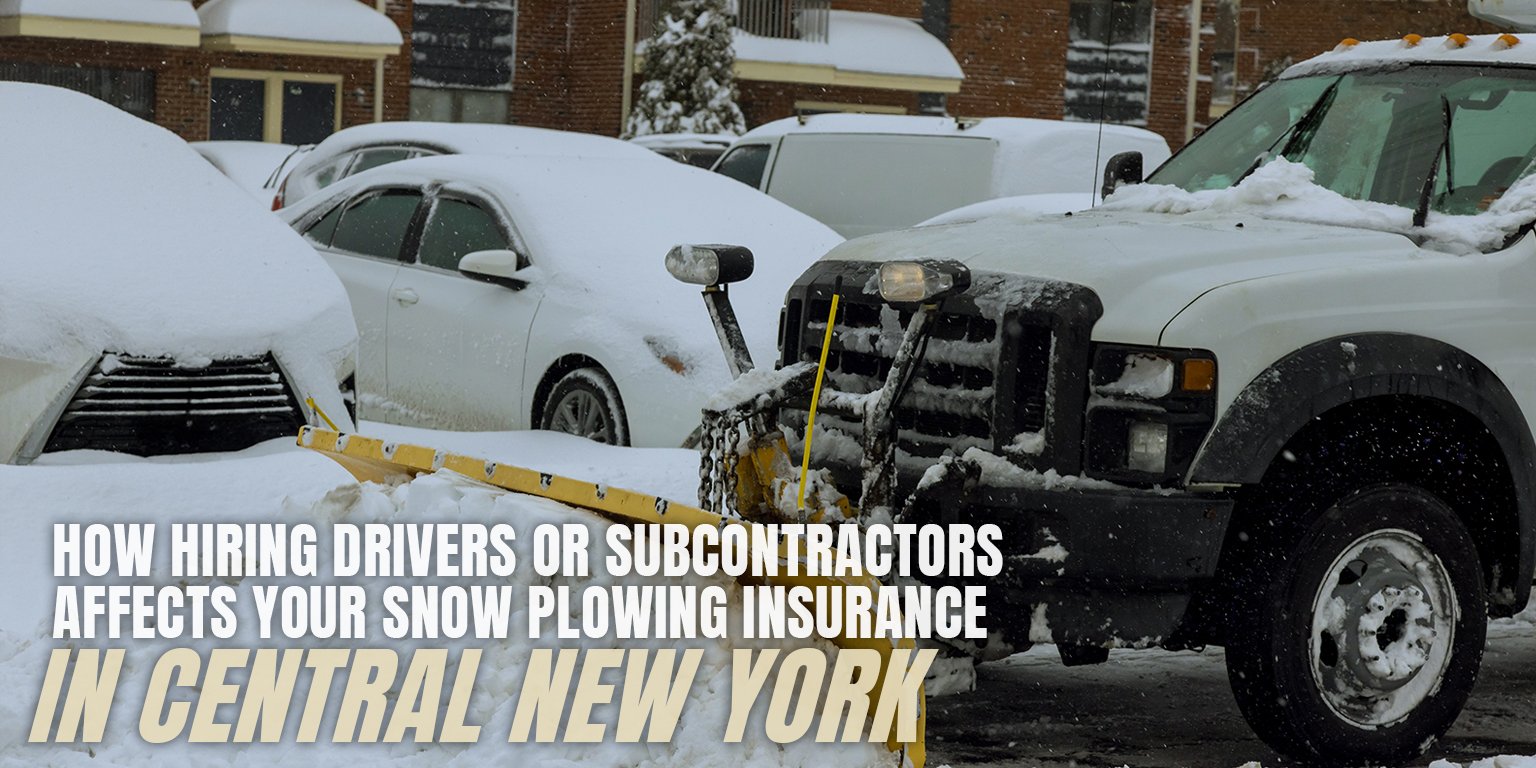
You've built a solid snow plowing business in Central New York, and demand keeps growing. When a major storm hits and your phone won't stop ringing, you realize you need help—another driver, maybe a subcontractor with their own equipment. But you wonder: does hiring someone change your insurance? Will your current policy cover additional drivers? What if something goes wrong?
You're not alone. Many CNY snow plowers hesitate to expand because they're uncertain how hiring affects their insurance coverage. Your biggest worry isn't just finding reliable help—it's discovering too late that your policy doesn't cover your new driver after an accident, or that a subcontractor's claim falls back on you because their coverage lapsed.
At the Horan insurance agency, we work with snow plowers throughout Central New York who are expanding their operations. As an independent agency working with multiple carriers, we can discuss how different hiring scenarios affect your insurance requirements and help you explore coverage options as your business grows.
This article explains how hiring employees versus using subcontractors affects your insurance, what coverage changes you'll need, what to verify before bringing anyone on, and how to notify your carrier about these changes. We'll help you understand the insurance implications so you can grow your business with confidence.
 Understanding the Insurance Difference Between Employees and Subcontractors
From an insurance perspective, employees and subcontractors create entirely different obligations for your business. This distinction affects both your workers compensation requirements and your liability exposure.
When you hire an employee—someone you pay wages, withhold taxes for, and direct on the job—you're required by New York State law to carry workers compensation insurance. This applies whether you hire one person or ten.
The employee drives your truck, uses your equipment, and works under your direction. If they're injured while plowing, your workers comp policy responds.
When you hire a subcontractor—an independent business entity with their own equipment and insurance—they're responsible for their own workers comp coverage.
You don't withhold taxes, and they control how they complete the work. However, you're still responsible for verifying they maintain appropriate insurance coverage. If a subcontractor's insurance lapses or proves insufficient, liability can potentially shift back to you.
The difference seems straightforward, but CNY snow plowers sometimes misclassify workers. Calling someone a "subcontractor" doesn't make them one in the eyes of insurance carriers, the New York State Department of Labor (DOL), or the Workers Compensation Board (WCB).
If you provide the truck, the blade, and direct when and how they plow, most carriers will classify that person as an employee—regardless of how you structure payment. Penalties for misclassification in New York can include stop-work orders, steep fines, and liability for all unpaid premiums.
How Hiring Employees Changes Your Workers Compensation Requirements
The moment you hire your first employee in New York, you're required to carry workers compensation insurance. This requirement applies to snow plowing operations just as it does to any other business. You can't opt out, even if your employee agrees to waive coverage.
Your workers comp premium is calculated based on your payroll and the classification code for snow plowing work. When you add employees, you'll need to report their wages to your carrier. If you hired someone mid-season and didn't report it, you could face a significant premium adjustment during your annual audit. Carriers review your actual payroll at year-end and adjust premiums accordingly.
Seasonal and Part-Time Employee Requirements
Many CNY plowers hire seasonal help—perhaps a college student home for winter break or a part-timer who helps during major storms. Even seasonal or part-time employees require workers comp coverage. The duration of employment doesn't matter; the moment they're on your payroll and working, coverage is mandatory.
If you're already insured and want to add an employee, contact your agent or carrier before their first day. Most carriers can add coverage quickly, but some require underwriting approval for new employees with certain driving records. Don't assume your current policy automatically extends to new hires—verify coverage is in place before they start work.

How Additional Drivers Affect Your Commercial Auto Insurance
Adding a driver to your snow plowing operation affects your commercial auto insurance in several ways. Every person who operates your truck must be listed on your policy, and their driving record directly impacts your premium.
 What Carriers Need to Know About New Drivers
When you notify your carrier about a new driver, they'll request the following information:
- Full name and date of birth
- Driver's license number
- Driving history and violations
- Accident record
They'll run a motor vehicle report to check for violations, accidents, and license status. A driver with a clean record might add minimal cost to your premium. A driver with multiple violations or at-fault accidents could increase your rate significantly—or result in the carrier declining to add them.
Some CNY snow plowers assume their commercial auto policy covers "any driver" who operates their truck. While some policies include broader coverage language, most require you to schedule specific drivers. Operating with an unscheduled driver could result in a denied claim if that person has an accident while plowing.
The timing of when you add drivers matters too. If you add a driver after your policy renews, expect a mid-term premium adjustment. If you're planning to hire before renewal, discuss it with your carrier beforehand so they can quote the additional cost accurately.
Your six steps to insuring your truck for snow plowing laid the foundation for your operation. Now that you're adding drivers, those same policies need updates to reflect your expanded team.

What You Need to Verify Before Hiring Subcontractors
When you hire a subcontractor to help with snow plowing overflow, you're trusting they maintain appropriate insurance. This trust can become expensive if you don't verify coverage before they start work.
Essential Coverage Types for Snow Plowing Subcontractors
At minimum, subcontractors should carry these coverages:
- Commercial auto insurance covering their truck and equipment
- General liability insurance covering their plowing work
- Workers compensation if they have employees
Before they plow their first driveway under your contract, request proof of these coverages.
Beyond verifying these basic coverages, you should also understand the difference between being listed as a certificate holder versus being named as an additional insured on your subcontractor's general liability policy. This distinction affects how claims involving subcontractor work are handled. We explain these coverage differences in detail in our article on certificate holder vs. additional insured coverage.
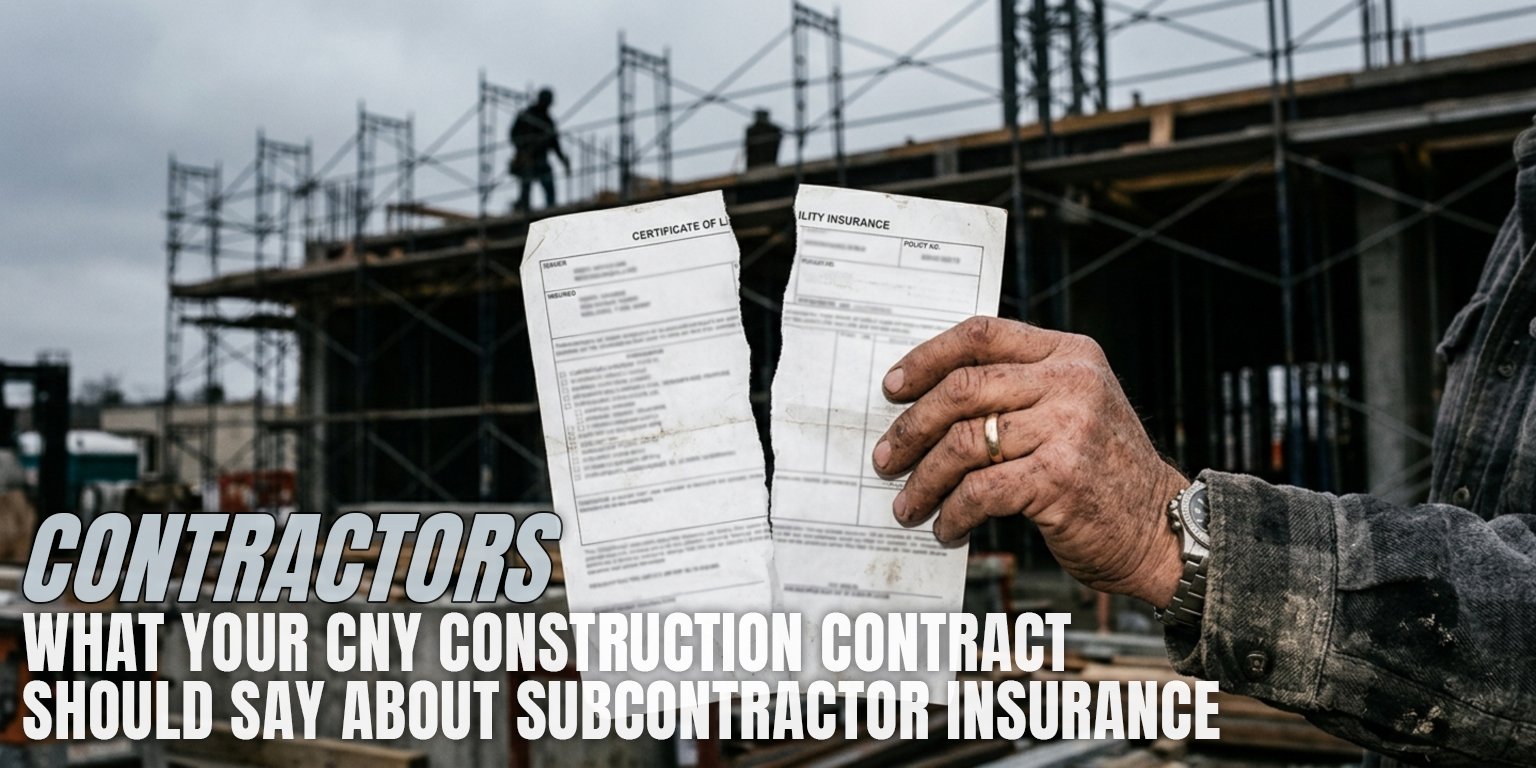
The proof comes in the form of a certificate of insurance. This document shows the subcontractor's policy types, limits, effective dates, and carrier information. Don't accept a verbal assurance that they're "covered"—request the actual certificate. The certificate should show coverage is current, with effective dates that extend through your entire contract period.
Some CNY plowing contractors hire subcontractors who claim they're covered under a personal auto policy. This creates substantial risk. Personal auto policies typically exclude coverage for commercial activities like snow plowing. If that subcontractor has an accident while plowing under your contract, their personal policy will likely deny the claim, leaving you potentially exposed.
Understanding why subcontractors need their own commercial insurance coverage—and the risks they face without it—can help you evaluate whether potential subcontractors are adequately prepared. We explore this topic in depth in our article on why subcontractors need their own insurance.
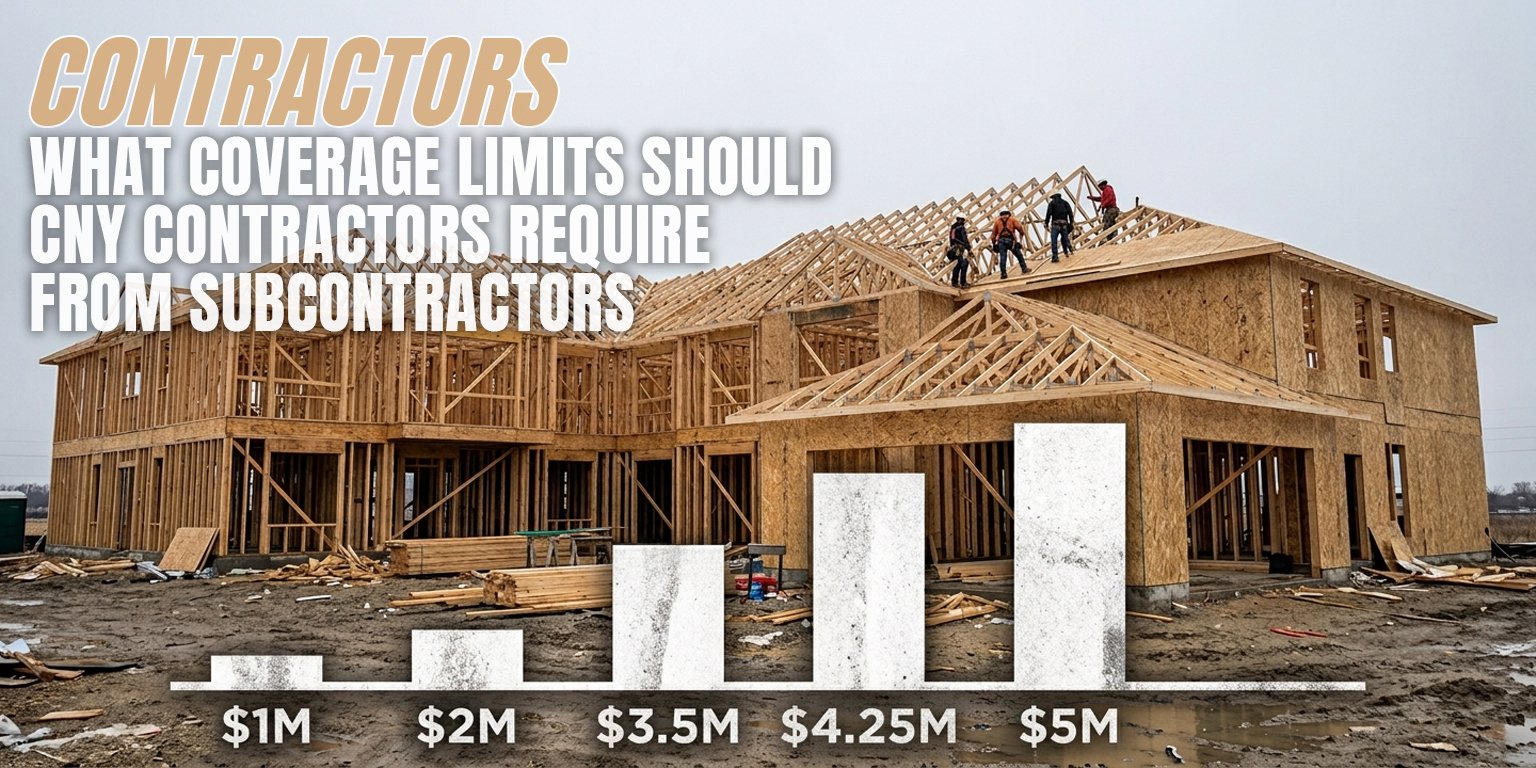
Pay attention to coverage limits as well. A subcontractor might carry the minimum required commercial auto limits, but if they cause a serious accident while plowing for you, insufficient limits could result in additional liability claims against your business. Many plowing contractors require subcontractors to carry at minimum $1 million in general liability coverage.
 Why You Should Review Subcontractor Certificates of Insurance Regularly
Receiving a certificate of insurance when you first hire a subcontractor isn't enough. Policies expire, carriers cancel coverage for non-payment, and circumstances change. Regular verification throughout your working relationship helps address coverage gaps before they become problems.
Request updated certificates annually, or whenever the subcontractor's policy renews. If a subcontractor works for you throughout multiple snow seasons, don't assume their coverage from two years ago remains in effect. Policies lapse, carriers change, and coverage terms can shift.
Some subcontractors let their coverage lapse during off-season months to save money, then reinstate it when the snow season begins. This creates a window of vulnerability. If they're storing equipment on a property you manage, or if there's any work activity during the lapse period, uncovered incidents could affect you.
The certificate should name your business as the certificate holder. This means the carrier will notify you if the subcontractor's policy is cancelled or non-renewed. Without this notification provision, you might not learn about a coverage lapse until after an incident occurs.
Many CNY plowers work with the same reliable subcontractors season after season. These established relationships build trust, but they don't eliminate the need for regular insurance verification. Even long-term subcontractors face financial pressures that might lead to dropped coverage.
How to Notify Your Carrier When You Hire
Whether you're adding an employee or contracting with a subcontractor, notification to your insurance carrier should happen before the person begins work—not after an incident occurs.
Information Required for Adding Employees
For employees, contact your carrier as soon as you've made the hiring decision. Provide the employee's complete information:
- Legal name
- Date of birth
- Social Security number
- Home address
- Driver's license number
- Start date
If they'll be driving your truck, expect the carrier to request consent for a motor vehicle report. This process can take a few days, so don't wait until the morning they start.
For subcontractors, notify your carrier that you're using independent contractors for overflow work. Some carriers want copies of subcontractor certificates on file. Others simply note in your policy file that you use subcontractors and verify you have a process for confirming their insurance. Either way, proactive communication helps ensure your policy responds appropriately if issues arise.
When you add drivers mid-season, you'll typically receive a bill for the additional premium. This amount is prorated based on how much of the policy term remains. If you add someone in January with a policy that renews in April, you'll pay three months of additional premium.
If you stop working with an employee or subcontractor, notify your carrier immediately. For employees who are no longer on payroll, removing them from your policy can reduce your premium. For subcontractors you're no longer using, updating your carrier's records keeps your policy information accurate.
Growing Your Snow Plowing Business with Appropriate Coverage
We covered how hiring employees requires workers compensation insurance, how additional drivers affect your commercial auto policy, what to verify before hiring subcontractors, why regular certificate reviews matter, and how to notify carriers about staffing changes.
Picture your expanded operation running through a busy CNY winter: your new driver handles residential accounts while you focus on commercial lots, or your subcontractor takes overflow work during major storms.
When your driver backs into a parked car in Liverpool, your commercial auto policy can typically respond because you scheduled them properly. When your employee slips on ice and injures their back, your workers comp coverage can address their medical bills. Your business continues operating because you took the time to update your insurance as you grew.
Skip these steps and imagine a different scenario: your new driver has an accident, but the claim is denied because you never added them to your policy. Or a subcontractor's coverage lapsed months ago, and now a property damage claim from their work falls back on your business.
Or worse—you hired an "independent contractor" who New York State classifies as an employee, and you're facing penalties for operating without required workers compensation coverage.
The Horan insurance agency works with snow plowing businesses throughout Central New York as they expand operations. As an independent agency, we work with multiple carriers and can discuss how different hiring scenarios affect your insurance requirements.
We can help you explore coverage options for adding drivers, review subcontractor certificate requirements, and explain carrier notification processes based on your specific growth plans.
Click the Get a Quote button below to discuss how hiring employees or subcontractors affects your snow plowing insurance in Central New York.