
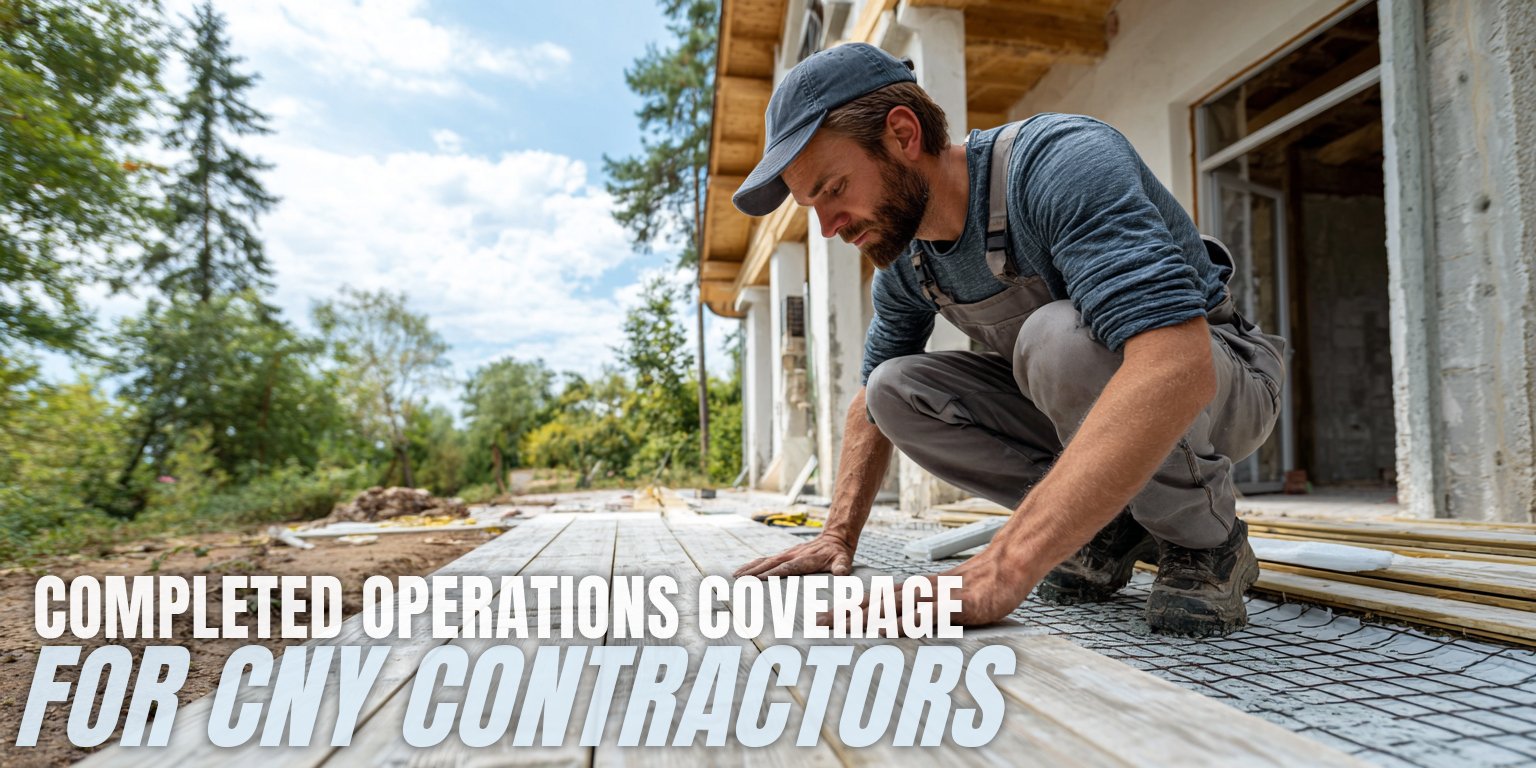
Finishing a roofing installation in Baldwinsville or an HVAC project in Oswego means you're ready to move on to the next job. But what happens six months later when that homeowner calls reporting a leak traced to your work?
Or when a commercial client in Fulton discovers electrical issues during a building inspection? These scenarios represent a coverage gap many contractors don't recognize until they face a claim.
At the Horan insurance agency, we work with contractors throughout Central New York to discuss how general liability coverage operates both during active work and after project completion. We can review how completed operations coverage functions as part of your commercial general liability policy and how it responds to claims arising after you finish a job.
This article examines how completed operations coverage extends liability coverage beyond completion dates, when this coverage responds to claims, and how it applies to the work Central New York contractors perform.
 How Completed Operations Extends Your General Liability Coverage
Your commercial general liability policy includes two primary coverage sections under Coverage B. Operations coverage addresses claims arising while you work on a project. Completed operations coverage addresses claims that arise after you finish the work.
Consider a scenario where a Syracuse contractor installs a commercial HVAC system in October. The system functions well through the mild fall weather, but when January's cold arrives, the unit fails due to an installation error. Since the contractor finished the installation in October, operations coverage no longer applies. Completed operations coverage would typically respond to this type of claim.
This distinction matters because problems don't always appear immediately. Water damage from a roof installation might not become visible until after several rain events. Concrete work might not show cracking until after the full curing process and exposure to Central New York's freeze-thaw cycles.
When Completed Operations Coverage Responds to Claims
Completed operations coverage typically responds when:
- Bodily injury or property damage occurs after you complete work
- The injury or damage arises from your completed work or operations
- The injury or damage occurs away from the premises you own or rent
- The injury or damage occurs after you relinquish possession of the work
The coverage generally addresses both the legal defense costs and any damages you become legally obligated to pay, up to your policy limits.

Discovery Periods and Long-Tail Liability
One significant aspect of completed operations coverage involves when problems are discovered rather than when they occur. Insurance policies typically operate on an "occurrence" basis, meaning they cover claims for incidents that occur during the policy period, even if the claim is filed years later.
This extended tail of potential liability makes completed operations coverage particularly important for contractors. Different trades face different discovery timelines based on when defects typically become apparent:
- Roofing contractors often see claims emerge after the first significant weather event—perhaps after a heavy Central New York snowfall or ice dam formation
- HVAC installers may receive claims when systems are tested during extreme temperatures
- Plumbing contractors might face claims when pipes freeze during winter or when water damage becomes visible months after installation
- Electrical contractors often hear about problems during home inspections or property sales
Understanding What Constitutes "Completion" for Coverage Purposes
Determining when work is "completed" affects when completed operations coverage begins. Under standard commercial liability policies, work is typically considered complete when:
- All work under the contract is finished
- All work at one job site is done if the contract calls for work at multiple sites
- A portion of work is put to its intended use if the contract calls for work in phases
This definition can create some gray areas. If you install a heating system in a Cicero home but return three months later to address a minor adjustment, does that reset the completion date? Generally, routine service calls or minor adjustments don't restart the clock, but substantial additional work might.
How Aggregate Limits Work in Completed Operations
Completed operations coverage shares an aggregate limit with products liability coverage. This "products-completed operations aggregate" represents the maximum the policy will pay for all claims arising from completed operations and any products you sell during the policy period.
For a contractor carrying a policy with a $2 million products-completed operations aggregate, this limit applies to all completed operations claims during that policy year. If you face two large claims that together exceed $2 million, you would be responsible for the excess amount.
This shared aggregate differs from your general liability per-occurrence limit. You might have a $1 million per-occurrence limit (the maximum paid for any single claim) and a $2 million products-completed operations aggregate (the maximum paid for all completed operations and products claims combined during the policy period).
How Contract Requirements Drive Coverage Needs
Many commercial clients require contractors to maintain extended completed operations coverage. A commercial property owner in Syracuse might require you to maintain coverage for two or three years after project completion. Some contracts specify minimum coverage amounts that exceed standard policy limits.
These contractual requirements can affect:
- The length of time you need to maintain coverage after finishing a project
- The minimum limits you must carry
- Whether you need an extended reporting period (tail coverage) when you switch insurers or retire
Without meeting these requirements, you might face contract violations or lose the ability to collect final payments on large commercial projects.
Making Informed Decisions About Completed Operations Coverage
Understanding how completed operations coverage functions helps you make informed choices about your general liability policy. Consider how long problems might take to surface in your specific trade, what your commercial clients require in contracts, and how your claims history affects your coverage options.
The Horan insurance agency assists Central New York contractors with information about how completed operations coverage works within commercial general liability policies. We can discuss coverage options from different carriers and review how various policy structures address your business operations.
Click the Get a Quote button below to learn more about how completed operations coverage applies to your contracting business in Central New York.

Topics: