

When you review your commercial property policy, you typically see separate limits: one for your building and another for business personal property. But what happens when a major loss affects one category far more than the other? Many Central New York business owners discover that separate limits can create complications when damage doesn't fall neatly within those predetermined allocations.
At the Horan insurance agency, we work with Central New York businesses to explore commercial property coverage options. As an independent agency working with multiple carriers, we can help you understand how blanket coverage structures work and whether this approach might address your situation.
In this article, we'll explain how blanket coverage combines your building and contents limits into one shared amount, when this structure might benefit your business, and what considerations come with this coverage approach.
Understanding How Blanket Coverage Differs from Separate Property Limits

Traditional commercial property policies separate coverage into distinct categories: building coverage and business personal property (BPP) coverage. A business might carry $500,000 for the building and $75,000 for contents, with each limit applying only to its designated category.
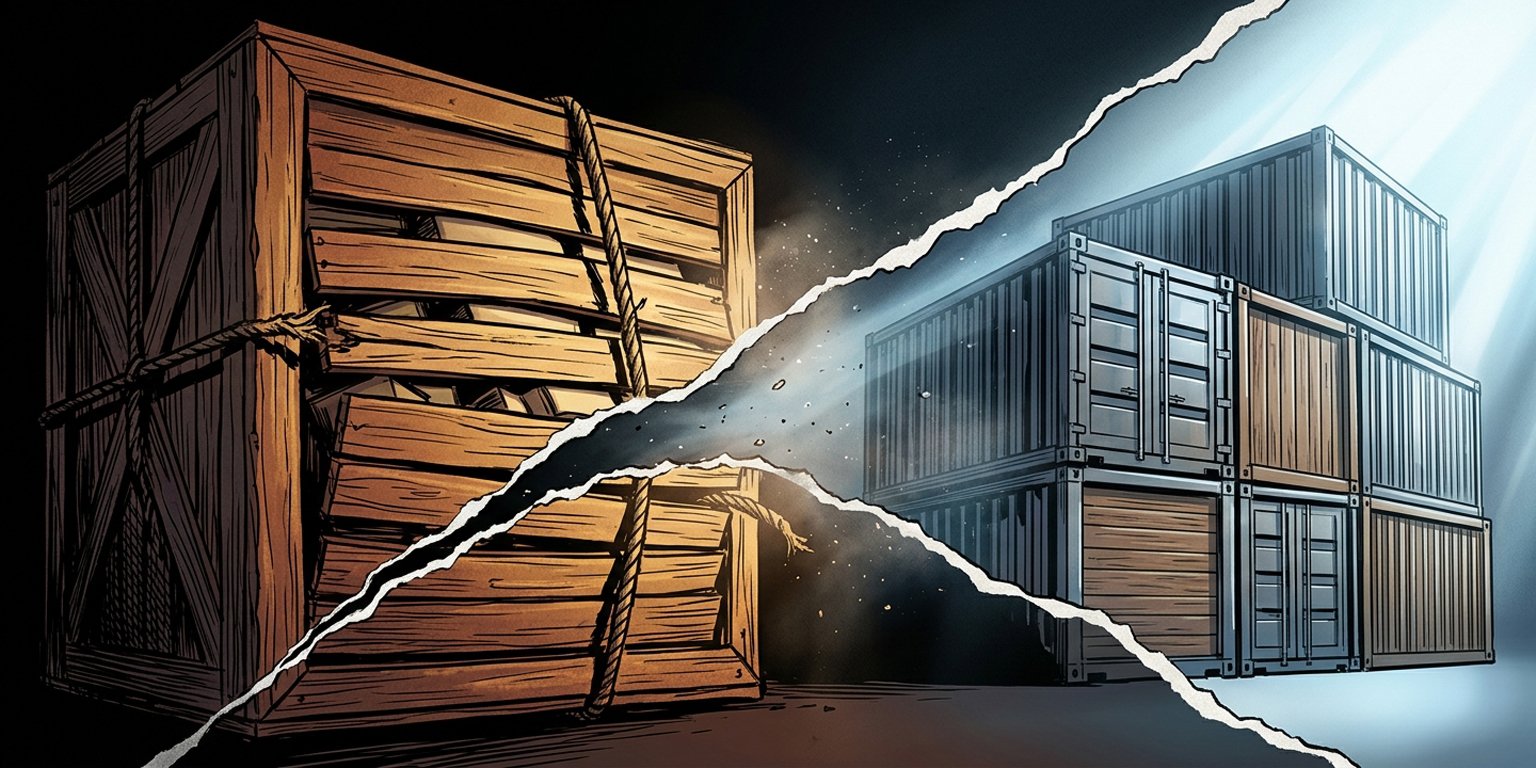
Blanket coverage takes a different approach by combining these limits into one total sum. Instead of $500,000 building plus $75,000 business personal property as separate buckets, you might have $575,000 in blanket coverage that can be allocated between building and contents as needed for a covered loss, subject to policy terms and conditions.
This structure matters most when losses affect one category disproportionately.
How Blanket Coverage Works When Building and Contents Losses Are Unequal
The flexibility of blanket coverage becomes clear in scenarios where damage heavily impacts either the building or the contents.
Consider a retail electronics store in DeWitt with separate limits: $750,000 for the building and $100,000 for business personal property. A major water leak ruins all the inventory in the storage room—$250,000 worth of electronics. The building itself suffers about $75,000 in damage to drywall, flooring, and electrical systems.
With separate limits, the business faces a problem. The policy could cover the $75,000 building damage, but the business personal property limit caps contents coverage at $100,000—leaving $150,000 of inventory loss uncovered.
Now consider the same scenario with blanket coverage of $850,000 (the combined total). The policy could potentially apply $250,000 to replace the inventory and $75,000 to repair the building, using $325,000 of the blanket limit. The business receives fuller coverage for the actual loss that occurred, subject to policy terms and conditions.
The reverse situation works similarly. Imagine a manufacturer in Cicero carries blanket coverage for a building and modest equipment. A fire heavily damages the building structure ($600,000 in repairs) but causes minimal equipment loss ($50,000).
With separate limits of $500,000 building and $150,000 business personal property, the business couldn't fully cover the building damage. With $650,000 in blanket coverage, the policy could potentially allocate $600,000 to the building and $50,000 to equipment.
Types of Businesses That May Benefit from Blanket Coverage
Blanket coverage can make sense for businesses where the relationship between building value and contents value creates vulnerability:
Retail businesses with high-value inventory often carry contents worth as much or more than their building improvements. A jewelry store, electronics retailer, or furniture showroom might find blanket coverage provides better flexibility than separate limits.
Warehousing and distribution operations typically hold substantial inventory that fluctuates seasonally. Blanket coverage can address situations where inventory values surge beyond the standard business personal property limit during peak seasons.
Manufacturing facilities might face either scenario—major building damage with minor equipment loss, or equipment damage with limited building impact. The flexibility works both ways.
Businesses in older buildings where structural damage from fire, wind, or water could exceed building limits while contents remain relatively modest might benefit from the ability to allocate more coverage to building repairs.

Comparing Blanket Coverage to Separate Building and Business Personal Property Limits
Neither approach is inherently better—the right structure depends on your property values, the nature of your business, and your concerns about disproportionate losses.
Separate limits work well when:
- Building and contents values remain relatively stable
- You want predictable, clearly defined coverage for each category
- Your business doesn't face scenarios where one category might suffer disproportionate loss
- Policy management is simpler with distinct limits
- Your building value far exceeds contents value and you don't foresee scenarios where contents losses would approach your business personal property limit
- Your lender requires specific building coverage amounts that need to remain distinct
- You carry very different deductibles for building and contents and want those to remain separate
Blanket coverage typically makes more sense when:
- Inventory or equipment values fluctuate significantly
- The relationship between building and contents values creates vulnerability to gaps
- You want flexibility in how coverage applies after a loss
- Your business could experience major loss to either building or contents
Cost considerations vary. Blanket coverage may cost slightly more than separate limits in some cases, though the difference often depends on the carrier and your specific property values.
Coinsurance Requirements with Blanket Coverage
Many blanket coverage policies include coinsurance provisions that require you to insure to a certain percentage of the combined value of your building and business personal property—commonly 80% or 90%.
Here's how coinsurance works with blanket coverage: Suppose your building is worth $600,000 and your business personal property is worth $200,000, for a combined total of $800,000. Your policy has an 80% coinsurance requirement, meaning you should carry at least $640,000 in blanket coverage ($800,000 × 80% = $640,000).
If you only carry $500,000 in blanket coverage and experience a $200,000 loss, the coinsurance penalty would reduce your payment:
(Amount of Insurance Carried ÷ Amount Required) × Loss Amount = Payment
($500,000 ÷ $640,000) × $200,000 = $156,250 payment
Instead of receiving $200,000 (minus deductible), you'd receive only $156,250 (minus deductible) because you didn't meet the coinsurance requirement.
The penalty applies regardless of whether the loss involves the building, contents, or both. Maintaining adequate blanket limits based on the combined value of your building and business personal property helps you avoid coinsurance penalties.
Calculating Appropriate Blanket Coverage Amounts
Determining adequate blanket limits requires assessing the combined value of your building and business personal property:
- Establish building replacement cost (what it would cost to rebuild the structure today)
- Calculate business personal property value at replacement cost or actual cash value, depending on your policy
- Add these values together to determine total insurable value
- Apply the coinsurance percentage to determine minimum coverage needed
- Consider adding a cushion of 10–15% to account for property value increases during the policy term
For a restaurant in Baldwinsville, this might look like:
- Building replacement cost: $800,000
- Kitchen equipment, furniture, fixtures: $200,000
- Inventory and supplies: $30,000
- Combined total: $1,030,000
- 80% coinsurance requirement: $824,000 minimum coverage
- Recommended blanket limit with cushion: $900,000–$950,000
Keep documentation that supports your property values:
- Recent building appraisals or replacement cost estimates
- Equipment purchase receipts and current values
- Inventory records
- Photos of your business property
This documentation helps establish appropriate blanket limits and supports claims if losses occur.
Working with Your Agent to Evaluate Coverage Structure
Your licensed insurance agent can help you assess whether blanket coverage or separate limits better address your situation. The evaluation typically involves:
- Reviewing your building and contents values to understand the relationship between them
- Discussing loss scenarios that could affect your business
- Comparing costs between blanket coverage and separate limits from different carriers
- Examining coinsurance requirements and how they apply to blanket coverage
- Considering your risk tolerance for disproportionate losses
Business property coverage structure isn't one-size-fits-all. What works for a retail business with high inventory values might not work for a professional office with modest contents.
Reviewing Your Coverage as Property Values Change
Property values change as businesses grow, expand inventory, upgrade equipment, or make building improvements. Review your blanket coverage:
- Annually before policy renewal to adjust limits based on current property values
- After major building improvements that increase replacement cost
- When you significantly increase inventory or acquire expensive equipment
- If you experience substantial business growth that affects property values
Some businesses benefit from semi-annual reviews, particularly those with seasonal inventory fluctuations or ongoing building improvements.
Understanding Your Commercial Property Coverage Options
Blanket coverage works by combining building and business personal property limits into one shared amount that can be allocated as needed for covered losses. This structure can provide flexibility when damage disproportionately affects either your building or your contents, though it requires careful attention to coinsurance requirements and total property values.
The Horan insurance agency works with Central New York businesses to explore commercial property coverage structures. We can assess your building and contents values, discuss how different coverage approaches might address your situation, and help you compare options from multiple carriers.
Our independent agency model allows us to explore both blanket coverage and separate limit structures to see what might work as your business evolves.
Click the Get a Quote button below to discuss your commercial property coverage structure. We can review your current limits, identify whether blanket coverage might provide benefits for your situation, and help you determine appropriate coverage amounts based on your property values.

Topics: