
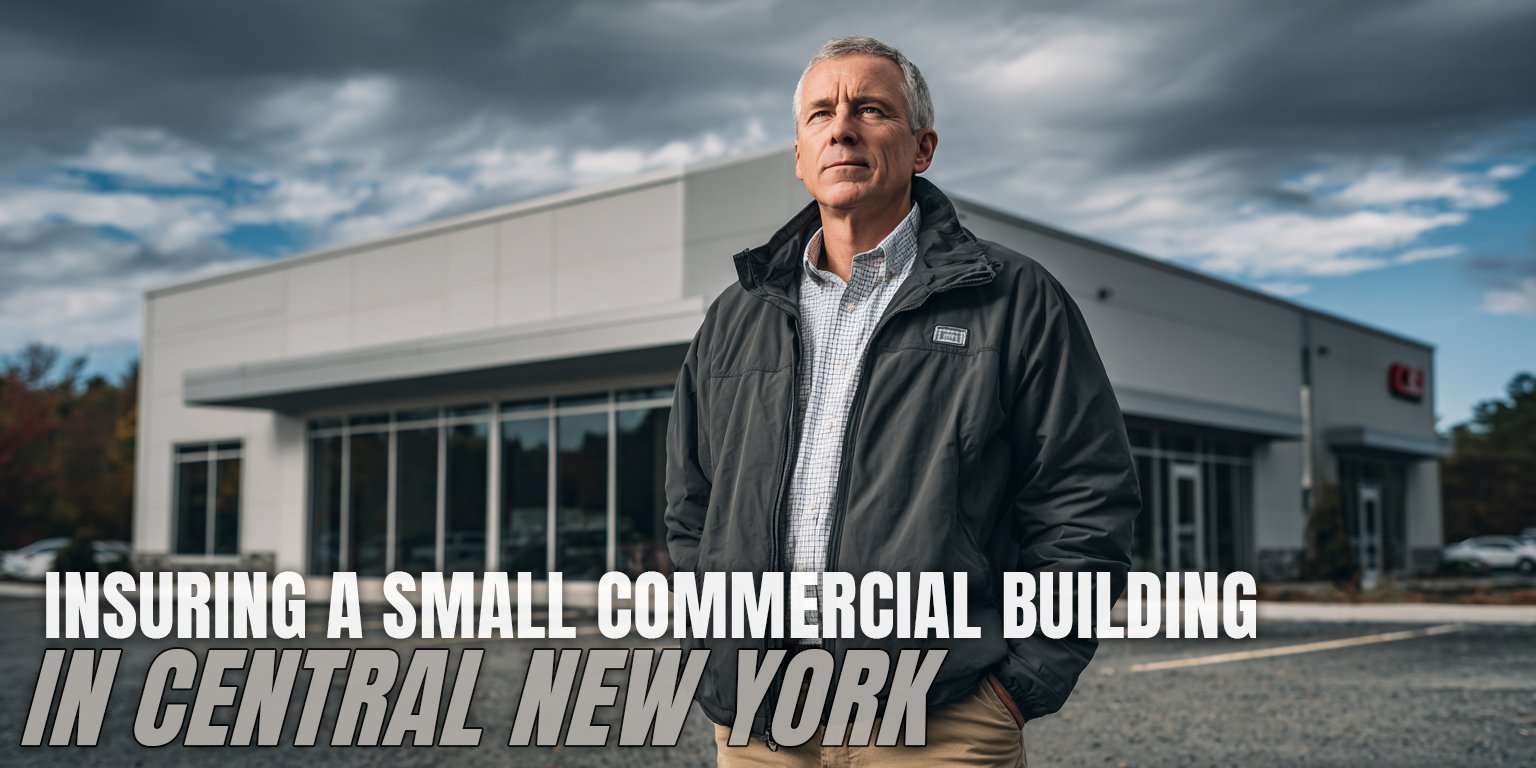
You own a small commercial building in Central New York — maybe a strip unit near Baldwinsville, a professional office suite in Liverpool, or a retail space in Camillus. You have a Lessor's Risk Only policy, and you've assumed it handles everything. It may handle quite a bit, but there are coverage questions it likely doesn't answer — and the gaps can surface unexpectedly.
At the Horan insurance agency, we work with small commercial property owners across CNY and help them understand what their policies actually cover. We work with several carriers so we can discuss the options available for your specific property situation.
In this article, we'll address the coverage questions that Lessor's Risk Only policies leave open: who insures tenant improvements, what happens to a vacant building between tenants, who's responsible for glass coverage, and how to think about building valuation for smaller commercial properties.
What a Lessor's Risk Only Policy Actually Covers — and Where It Stops

A Lessor's Risk Only policy is designed for building owners who lease their property to tenants and don't conduct their own business operations on the premises. It typically combines general liability coverage with building property coverage.
That combination addresses the majority of your exposure as a landlord — but the form has limits that become apparent when you look closely at your lease agreements and occupancy situation.
The Lessor's Risk Only Policy Isn't a Catch-All for Every Property Scenario
Standard Lessor's Risk Only policies are written with the assumption that the building is occupied by a paying tenant operating a going business.
When conditions change — a tenant moves out, a build-out is underway, or a tenant installs significant improvements — the standard form may respond differently than you'd expect. Understanding those boundaries is part of managing a commercial property responsibly in New York State.
Tenant Improvements: Who Insures What Under a Triple-Net Lease
Triple-net leases, common among small retail and office properties throughout CNY, shift most operating costs — taxes, insurance, maintenance — to the tenant. But the insurance obligations around tenant improvements deserve careful attention in the lease language and in the policies held by both parties.
The Building Owner's Position on Improvements and Betterments
When a tenant builds out a space — adding partition walls, upgraded flooring, specialty lighting, or HVAC modifications — those improvements may become part of the building structure depending on lease language and the nature of the improvement. Whether the building owner or the tenant insures those improvements often depends on how the lease is written.
Under a triple-net lease, tenants commonly carry their own property coverage, which may include coverage for improvements and betterments they installed. However, if the tenant's policy lapses, is underwritten with inadequate limits, or excludes certain improvements, the building owner could face a loss with limited recovery options.
A few important points for CNY commercial landlords to consider:
- Lease language should specify who is responsible for insuring tenant improvements and betterments
- The building owner's Lessor's Risk Only policy may or may not include tenant improvements in its building valuation — this depends on the specific form and endorsements
- If improvements revert to the building owner upon lease termination, they should be reflected in the building's insured value
Discuss the language of your lease and your current policy with a licensed agent to clarify how improvements are treated under your specific coverage.
Vacancy: The Coverage Problem Between Tenants
One of the most common — and underestimated — exposure gaps for small commercial building owners in Central New York involves vacancy. When a tenant moves out and the space sits empty, standard commercial property policies respond differently than most owners expect.
New York's Vacancy Provisions and Why They Matter
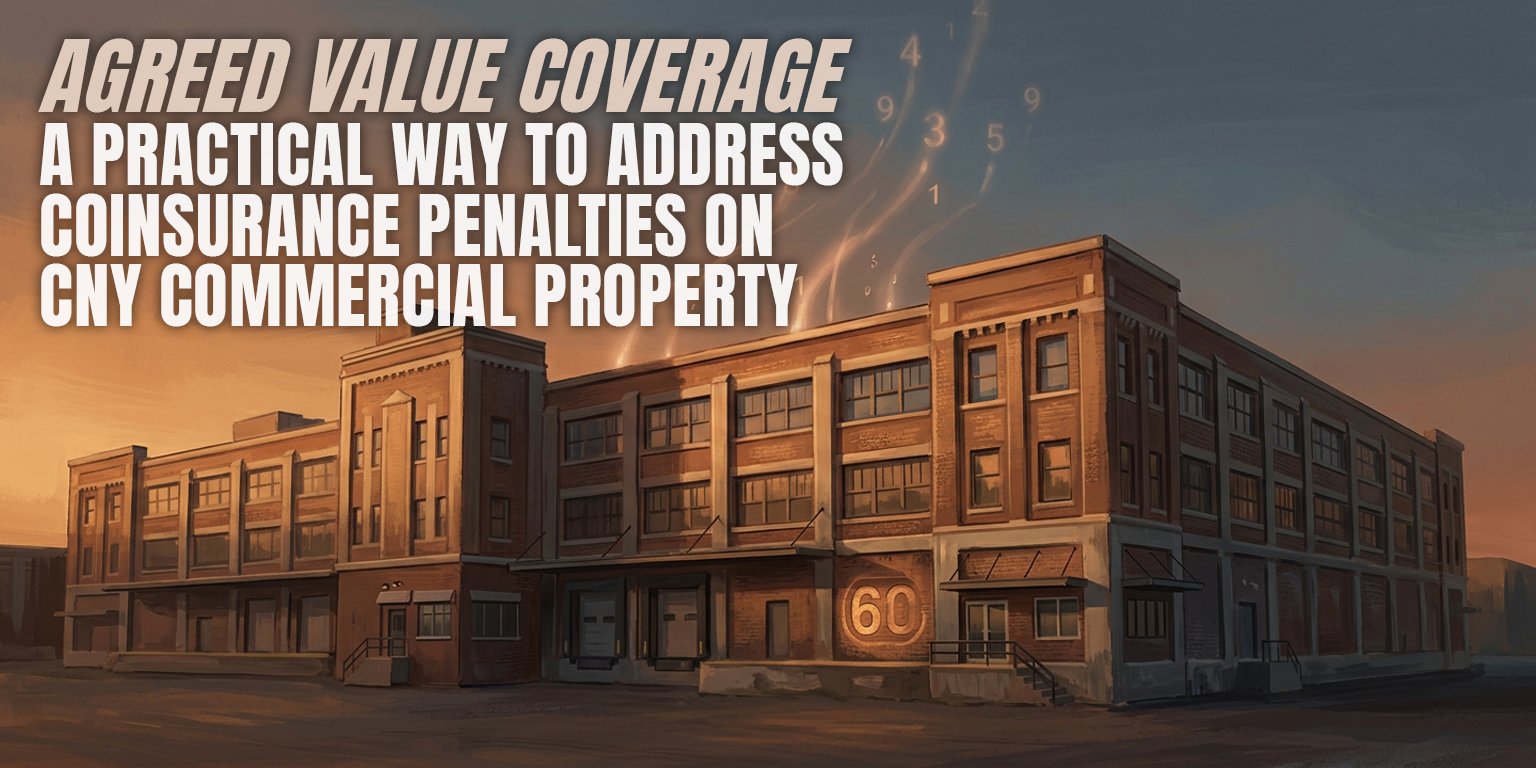
Under standard Insurance Services Office commercial property forms used in New York, a building that has been vacant for 60 or more consecutive days faces significant coverage restrictions. If a covered loss occurs during a period of vacancy, the insurer may:
- Reduce the claim payment by 15%
- Exclude coverage entirely for vandalism, sprinkler leakage, glass breakage, water damage, and theft
This reflects standard Insurance Services Office policy language, though individual carriers may set their own surcharge thresholds earlier — so the timeline worth confirming with your agent is the one in your specific policy. For a small landlord in Fulton or North Syracuse dealing with a six-month vacancy between tenants, these provisions can have real financial consequences.
What You Can Do About Vacancy Exposure
Some carriers offer vacancy permit endorsements that modify or suspend standard vacancy restrictions for a defined period. These endorsements are not automatic and typically require a separate conversation with your agent. If you know your building will sit empty between tenants, that's the time to address your coverage — not after a loss.
Glass Coverage: A Responsibility That Often Goes Unaddressed
Plate glass and storefront window damage is a surprisingly common source of claims for commercial property owners, particularly in CNY's urban retail corridors. Who pays for a broken storefront window — the building owner or the tenant — depends on the lease and on which party holds the applicable coverage.
Under many triple-net leases, tenants are responsible for glass maintenance and replacement. But tenant policies don't always include glass coverage as a standard component, and Lessor's Risk Only policies may treat glass as a sublimited or excluded item depending on the form.
Small commercial building owners should confirm with a licensed agent:
- Whether their Lessor's Risk Only or commercial property policy includes glass coverage and at what limit
- Whether the lease places glass responsibility on the tenant and whether the tenant's policy actually covers it
- Whether a standalone commercial glass policy or endorsement makes sense given the nature of the property
Building Valuation: Getting the Number Right for a Small Commercial Property
Underinsurance is one of the most consequential and most preventable problems in commercial property coverage. For small office buildings, retail strip units, and mixed-use properties throughout CNY, the insured value of the building is often set at purchase price or assessed value — neither of which necessarily reflects replacement cost.
Replacement Cost vs. Actual Cash Value in New York Commercial Property
New York commercial property policies are typically written on either a replacement cost basis or an actual cash value basis. The distinction matters significantly in the event of a major loss.
Replacement cost coverage pays to rebuild or repair the structure to its pre-loss condition without deducting for depreciation. Actual cash value applies depreciation, which means an older commercial building may receive considerably less than what it costs to rebuild — even at current local construction prices in Onondaga County and surrounding areas.
Construction costs in Central New York have risen materially over the past several years. A building insured to a value set three or four years ago may now be underinsured relative to current rebuilding costs.
Coinsurance and Its Impact on Small Commercial Building Claims

Most commercial building policies include a coinsurance clause — commonly 80% or 90% — that requires the building to be insured to a minimum percentage of its actual replacement value. If the building falls short of that threshold at the time of a loss, the insurer may apply a coinsurance penalty that reduces the claim payment proportionally, even for a partial loss.
For example, if a building has a replacement cost of $500,000 and carries an 80% coinsurance requirement, the policy should carry at least $400,000 in coverage. If it's insured for only $300,000 and a $100,000 loss occurs, the coinsurance penalty reduces what the insurer pays — an outcome that stems from an underinsured building rather than a coverage exclusion.
Before a Gap Becomes a Loss, Have the Right Conversation
Small commercial property ownership in Central New York comes with a specific set of insurance questions that a standard Lessor's Risk Only policy may not fully answer on its own.
Understanding how your lease obligations interact with your coverage, how vacancy provisions apply between tenants, who holds responsibility for glass, and whether your building is insured to an adequate value — these are the conversations worth having now.
The Horan insurance agency works with commercial property owners across CNY, including those with small strip units, professional office buildings, and retail spaces. We work with multiple carriers and can discuss how coverage options apply to your specific property and lease situation.
Click the Get a Quote button below to start a conversation about your commercial building coverage.