
You run a retail shop in Central New York. You source products from trusted suppliers, maintain quality standards, and serve your customers well. But when a product causes injury, you might face a lawsuit—even though you didn't manufacture anything.
This reality catches many Central New York retailers off guard. From Syracuse boutiques to Skaneateles gift shops, retailers often assume product liability falls solely on manufacturers. The legal reality differs significantly.
At the Horan insurance agency, we work with retailers throughout Central New York to address coverage considerations for product liability risks. As an independent agency, we can discuss options from different carriers to help you find coverage that fits your retail operation.
This article explores how retailers become liable for products they sell but don't make, the unique risks of carrying local artisan goods, and coverage considerations for your Central New York retail business. For a foundational overview of product liability coverage, see our guide to product liability insurance.
 How Retailers Enter the Liability Chain—Even Without Making Products
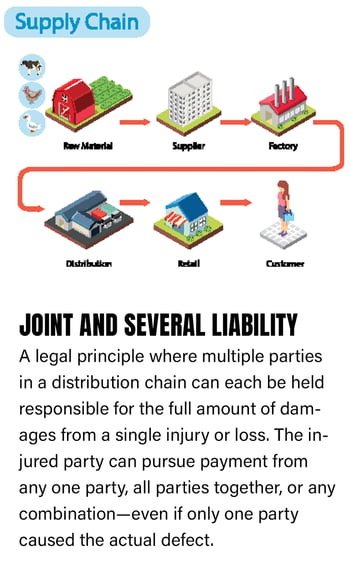
New York follows strict product liability law. When a product causes injury, the injured party can sue everyone in the distribution chain—manufacturer, distributor, and retailer. This principle, called "joint and several liability," means retailers face lawsuits regardless of who created the defect.
Consider a Syracuse gift shop selling imported toys. A child suffers an injury from a defective toy, and the family files a lawsuit. The manufacturer operates overseas with limited assets. The distributor dissolved last year. The gift shop becomes the only defendant with recoverable assets—making it the primary target.
Your general liability policy may provide some product liability coverage, but understanding the limits and exclusions matters for your situation. Many retailers discover coverage gaps only after receiving legal papers.
When Manufacturers Disappear or Lack Coverage
Retailers face heightened risk when:
- Overseas manufacturers become unreachable after a claim
- Small domestic producers go out of business
- Startup companies lack adequate insurance
- Individual artisans carry no coverage at all
Understanding these risks becomes particularly important for seasonal retailers and vendors. If you operate during peak business periods, our article on peak season coverage for CNY retailers explores additional timing considerations.
Local Artisan and Handmade Goods: Coverage Considerations for CNY Retailers
Central New York's vibrant artisan community creates opportunities—and risks—for retailers. Regional Market vendors, Skaneateles Art Festival participants, and downtown boutiques often feature local makers. These products add character to your inventory but require coverage considerations.
Say an Armory Square boutique sourced candles from a local crafter. A candle caused a house fire, and the injured homeowner sued. The artisan had no business insurance and limited personal assets. The boutique's policy responded, but the claim significantly impacted their insurance costs and carrier options.
When you sell items from local artisans, consider requesting certificates of insurance from suppliers and documenting product sourcing information. Keep records of batch numbers and production dates, particularly for higher-risk items.
Products like candles, cosmetics, bath products, and children's items carry higher liability potential. Consider a scenario where a Manlius boutique carries bath salts from a local maker that cause severe skin reactions. Without supplier insurance, the boutique's policy became the primary coverage source.
For retailers who participate in temporary retail events with artisan products, our guide on pop-up shops and farmers market insurance explores additional venue-specific requirements.
Private Label Products: When Your Name Becomes the Brand
Some Central New York retailers develop private label products—store-branded items manufactured by others. This arrangement increases your liability exposure because your name appears on the product, making you appear as the manufacturer to consumers and courts.
Whether you're a local artisan creating store-brand products or a gift shop adding your label to supplier items, private label arrangements require coverage discussions with your insurance carrier. Standard product liability limits may not address the increased exposure.
Resale, Consignment, and Vintage Goods Create Unique Liability Profiles
Retail operations involving used or vintage items face distinct considerations:
- Estate sale merchandise may contain lead paint or other hazards
- Vintage toys might not meet current safety standards
- Consignment agreements may shift liability between parties
- "As-is" disclaimers provide limited legal protection
Suppose a Fulton antique shop faced a claim when a vintage high chair collapsed, injuring a child. The shop assumed the "as-is" sale protected them. New York law didn't agree. Their insurance responded, but the incident highlighted coverage gaps in their policy.
Product Recall Obligations for New York Retailers
When the Consumer Product Safety Commission (CPSC) issues a recall, retailers must act. New York law requires retailers to:
- Stop selling the recalled product immediately
- Remove items from shelves and inventory
- Notify customers who purchased the item (if records exist)
- Process refunds or exchanges as specified in the recall
Say a Syracuse electronics retailer faced significant costs when a popular phone charger was recalled for fire risk. Beyond removing inventory, they needed to identify and contact purchasers—a process their standard insurance didn't cover. Business interruption losses and notification expenses added up quickly.
Standard commercial policies typically provide limited coverage for recall costs. Dedicated product recall insurance exists but isn't included in basic coverage packages.
Documentation Requirements: Why Records Matter in Product Liability Claims
When a product liability claim arises, documentation becomes critical:
- Supplier contracts and certificates of insurance
- Purchase orders showing manufacturer and distributor
- Batch or lot numbers for recalled items
- UPC codes and product descriptions
- Country of origin information
Without this documentation, defending against claims becomes more difficult and expensive. Courts may hold retailers more responsible when they can't demonstrate due diligence in supplier selection and product tracking.
Imagine a Liverpool retailer faced this challenge when sued over a defective household item. They couldn't provide manufacturer information for the product purchased three years earlier. Their insurance company paid the claim but noted the documentation failure in their underwriting file.
Vetting Suppliers: Considerations for Reducing Product Liability Risk
While no vetting process eliminates product liability risk, certain practices may help:
- Request certificates of insurance showing adequate coverage limits
- Ask for product safety certifications (CPSC, UL, FDA as applicable)
- Obtain testing reports for children's products
- Keep import documentation for international goods
- Document all supplier information and agreements
Consider an Oswego gift shop that implemented these practices after a product liability incident. While supplier insurance doesn't transfer liability away from the retailer, it provides additional coverage sources if claims arise. The shop now maintains a supplier compliance file demonstrating their vetting process—documentation that can prove valuable during claims or underwriting reviews.
Retailers should also consider how employee handling of inventory might affect liability. Our upcoming article on employee theft and crime coverage explores internal control measures that can support your overall risk management approach.
Coverage Considerations for Central New York Retail Operations
Your business insurance likely includes some product liability coverage as part of your general liability policy. However, standard policies include limits and exclusions that may not address your specific situation:
- Per-occurrence limits cap individual claim payments
- Aggregate limits cap total annual claim payments
- Coverage territories may exclude certain international manufacturers
- Pollution and professional services exclusions may apply
Consider discussing your product mix with your insurance carrier. Retailers selling higher-risk items—children's products, cosmetics, food items, electronics—may need higher limits or additional coverage endorsements.
Umbrella or excess liability coverage can extend your base limits, providing additional coverage when claims exceed your primary policy. For retailers with significant inventory values or high-risk products, this additional coverage merits consideration.
 How Seasonal Factors Affect Product Liability for CNY Retailers
Central New York's seasonal business patterns create unique considerations for product liability. Holiday shopping seasons bring increased foot traffic and higher transaction volumes—which means more products sold and potentially more claims exposure.
Weather-related disruptions can also affect product handling and storage. A February power outage in Syracuse might compromise refrigerated goods at a specialty food retailer, while spring flooding in low-lying areas could damage inventory. Our guide to CNY weather risk management addresses how seasonal challenges intersect with various coverage needs.
Retailers should review their coverage before peak seasons to confirm adequate limits for increased inventory values and transaction volumes.
Working with an Independent Insurance Agency for Product Liability Coverage
Product liability insurance isn't one-size-fits-all. As an independent agency working with multiple insurance carriers, we can discuss coverage options based on your retail operation:
- Product mix and risk profile
- Supplier relationships and documentation
- Private label or store-brand products
- Artisan and handmade goods
- Resale and vintage inventory
Different carriers approach retail product liability differently. Some specialize in certain retail sectors or provide more favorable terms for retailers with strong risk management practices.
We work with several carriers to help Central New York retailers explore coverage options. Our role involves discussing your operation, identifying coverage considerations, and presenting options from different insurers.
Product Liability Coverage: Ongoing Considerations for Your Retail Business
Product liability risk changes as your business evolves:
- Adding new product lines may require coverage updates
- Changing suppliers affects your risk profile
- Developing private label products increases exposure
- Expanding online sales may involve different coverage territories
Schedule regular coverage reviews with your insurance carrier, particularly when making significant business changes. What worked for your initial retail operation may not address your current situation.
For retailers managing multiple types of business risks—from product liability to cyber threats to seasonal staffing—our retail insurance series provides targeted information for Central New York operations. Upcoming articles will address employee theft protection and cyber liability for point-of-sale systems.
Click the Get a Quote button below to discuss product liability coverage considerations for your Central New York retail business.

Topics: