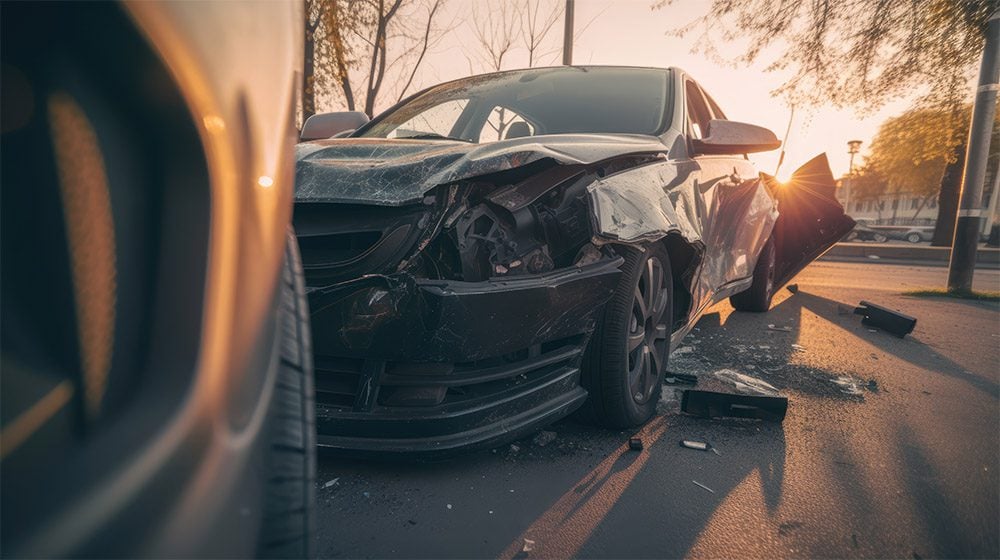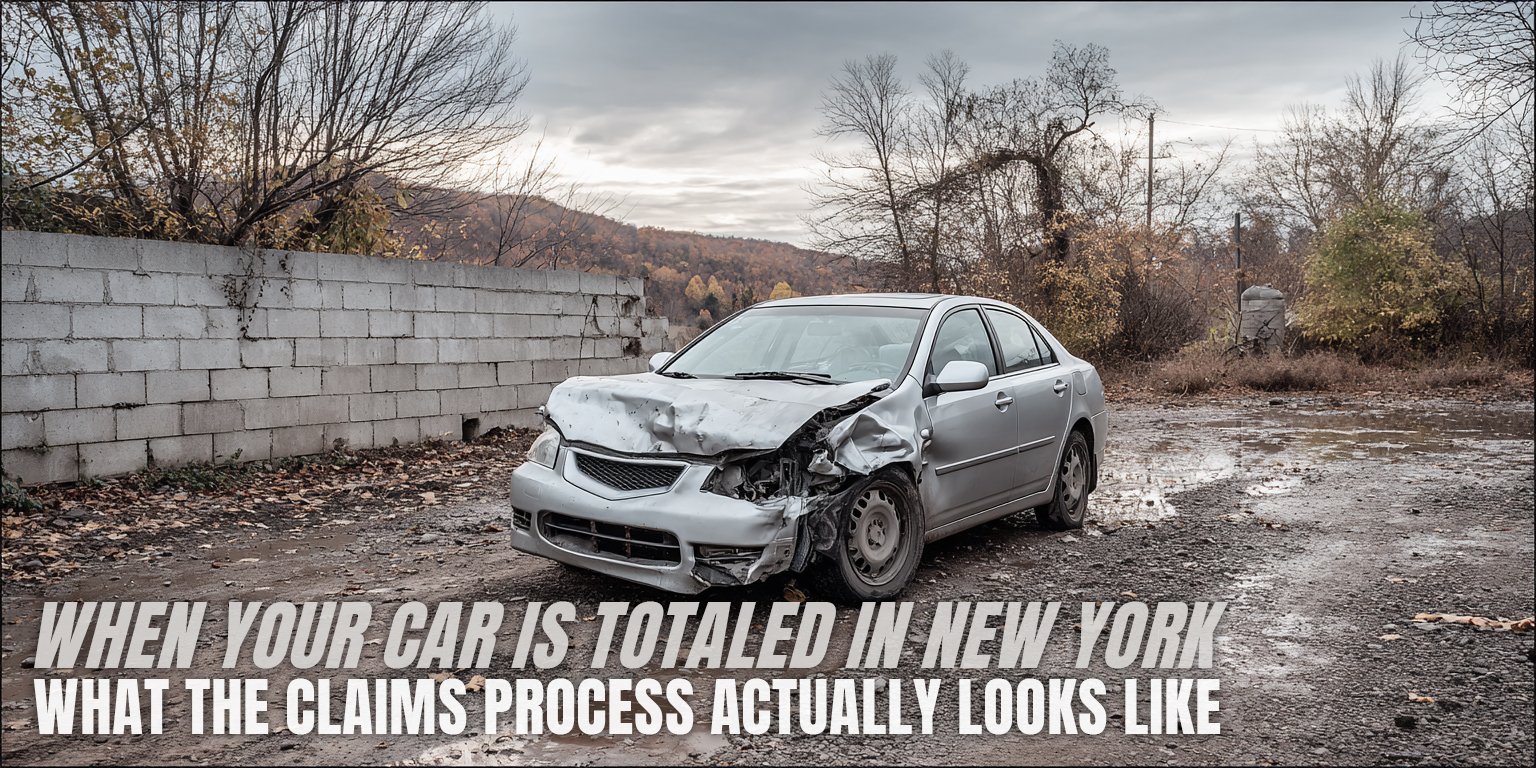

You accepted the settlement. The claim is closed. You told the carrier you want to keep the car. And now — you're wondering what happens next.
For most Central New York drivers who retain a totaled vehicle, that moment feels like the finish line. It isn't. It's closer to the starting line of a second process, one that involves the New York State Department of Motor Vehicles, a formal inspection, and real consequences for both your insurability and the vehicle's resale value.
At the Horan insurance agency, we work with multiple carriers and see how this plays out for drivers across the region.
This article covers what a salvage title means under New York law, how the rebuilt title inspection program works, what the title status does to your coverage options, and how to think through whether retaining the vehicle even makes sense in the first place.
What a Salvage Title Actually Means in New York
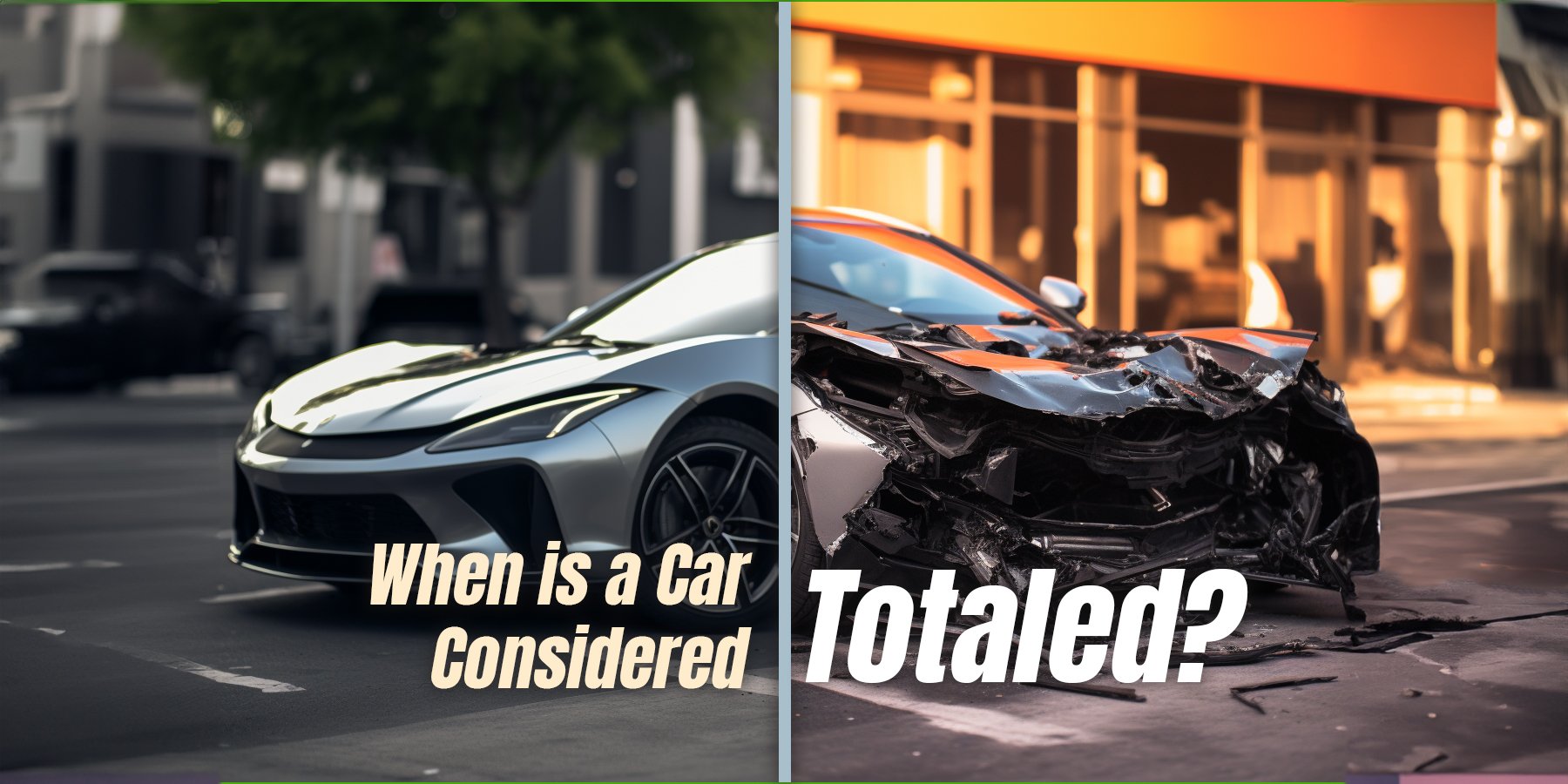
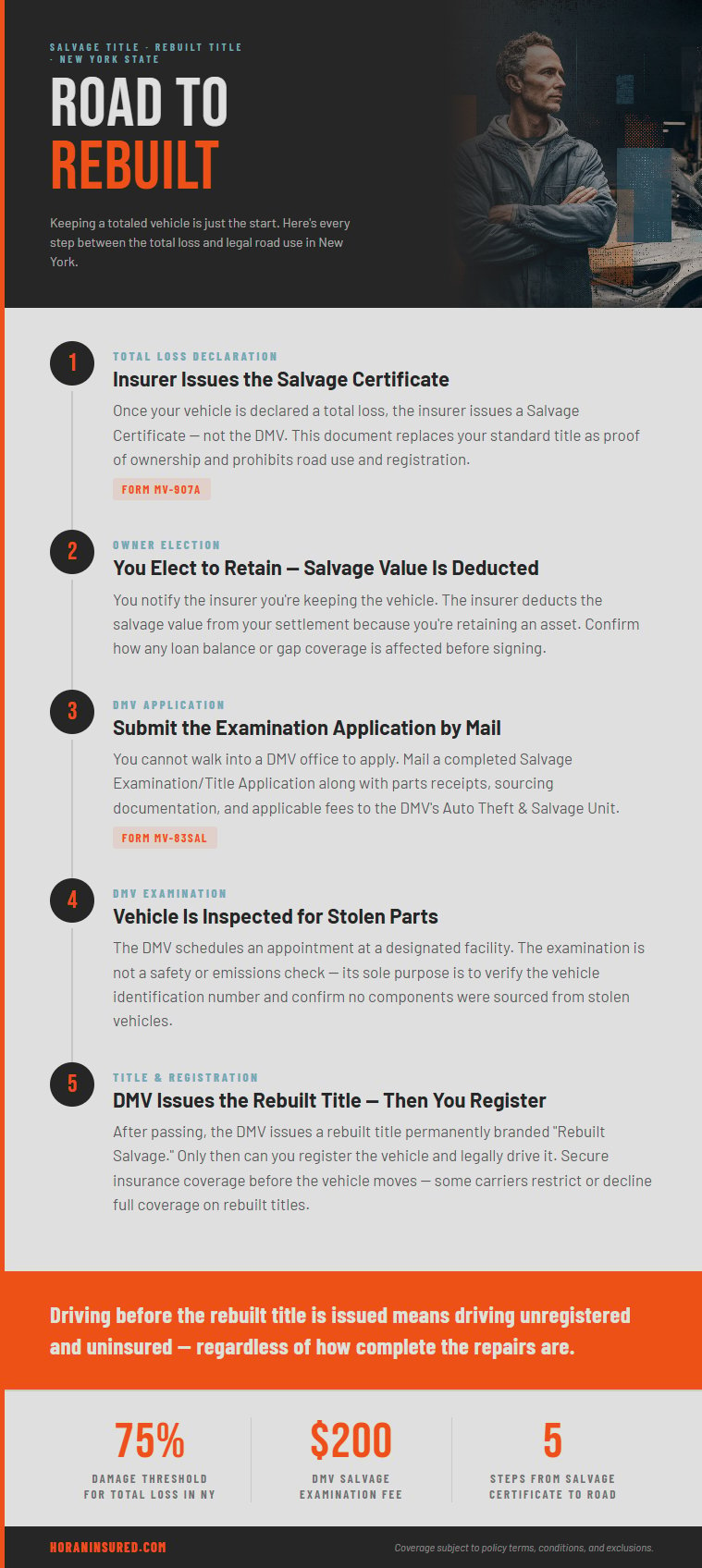
When a New York insurer declares a vehicle a total loss, they're required to notify the New York State Department of Motor Vehicles. Your insurer issues a Salvage Certificate — Form MV-907A — which replaces the standard title document as proof of ownership.
That salvage designation isn't a formality. A vehicle carrying a salvage certificate of title cannot be registered and cannot be legally driven on New York roads. It's not a matter of rushing to get the repairs done and then sorting out the paperwork — the vehicle is legally off the road until the title status changes.
If you're curious about how insurers arrive at a total loss declaration in the first place — including the 75 percent threshold under New York's Regulation 64 — our article on the New York total loss claims process covers that ground in detail.
The New York State DMV Rebuilt Title Inspection Program
To return a salvage vehicle to the road legally, you'll need to take it through the DMV's salvage vehicle inspection program. This is the formal process through which a salvage title can be converted to a rebuilt title — which is the document that allows the vehicle to be registered and driven again.
What the Inspection Actually Covers
The inspection is more thorough than a standard vehicle safety inspection. The examination is not a safety inspection, an emissions check, or a review of repair quality. Its sole purpose under New York law is to determine whether the rebuilt vehicle is stolen or contains stolen parts.
The DMV examiner will verify the vehicle identification number and confirm that major components — engine, transmission, and similar parts — weren't sourced from stolen vehicles.
The process starts before the vehicle ever moves. You'll submit a completed Salvage Examination/Title Application (Form MV-83SAL) by mail, along with supporting documentation. The DMV will then contact you with your appointment date, time, and facility location. Plan to bring the following to the examination:
- The salvage certificate of title
- Receipts or invoices for all parts used in the repair
- Proof of where those parts were sourced — junkyards, dealers, and online suppliers typically provide this
- Any other records the DMV may require, which you can confirm in advance through the New York DMV's salvage inspection guidance
Note that parts documentation requirements apply regardless of who performed the repairs. If you handle the work yourself, you'll still need receipts and sourcing records for every major component — the inspection process doesn't distinguish between professional shops and owner-performed repairs on that point.
Inspections take place at designated DMV facilities. Not every DMV office performs salvage inspections, so you'll need to confirm the correct location in advance.
After the Inspection
If the vehicle passes, the DMV issues a rebuilt title. That title will permanently reflect that the vehicle was once declared a salvage — that designation doesn't disappear, and it follows the vehicle through every future sale and title transfer.
What a Rebuilt Title Does to Your Insurability
This is where many people hit an unexpected wall. Once a vehicle carries a rebuilt title, not all carriers will offer the same coverage they would on a clean-title vehicle.
Some carriers will decline to write comprehensive or collision coverage on a rebuilt vehicle entirely. Others will offer it, but may require their own independent inspection before binding coverage, or may apply restrictions to the terms. The availability of full physical damage coverage on a rebuilt vehicle varies by carrier — which is one reason to contact your agent before you invest significantly in repairs.
Beyond coverage, the rebuilt title status has real consequences for resale value. Buyers — whether private individuals or dealerships — typically discount rebuilt-title vehicles substantially compared to clean-title equivalents with the same make, model, year, and mileage. That discount doesn't shrink over time.
The Cost Question: Is Retaining the Vehicle Worth It?
There's no universal answer here, but there are factors worth weighing honestly before you commit.
Situations where retaining may make sense:
- The vehicle is a classic, rare, or collector model where market replacement is difficult
- The repair estimate is low relative to what the insurer deducted for salvage value
- The vehicle has sentimental value that isn't reflected in its market price
- You have the mechanical ability to handle repairs yourself, which may change the cost equation — though documentation requirements still apply regardless
Situations where retaining often doesn't make practical sense:
- You still carry a loan balance on the vehicle — gap coverage terms vary by policy and carrier, so check your own policy carefully, but some gap policies contain exclusions or limitations when a vehicle is retained rather than surrendered
- The repair estimate is high relative to the salvage deduction from your settlement
- You need the vehicle as a daily driver and the inspection timeline creates problems
- You plan to sell the vehicle soon, since the rebuilt title will suppress what buyers will pay
Our earlier article on gap insurance explains how that coverage interacts with total loss settlements — worth reviewing if you're still financing the vehicle.
What Happens to Your Plates and Registration
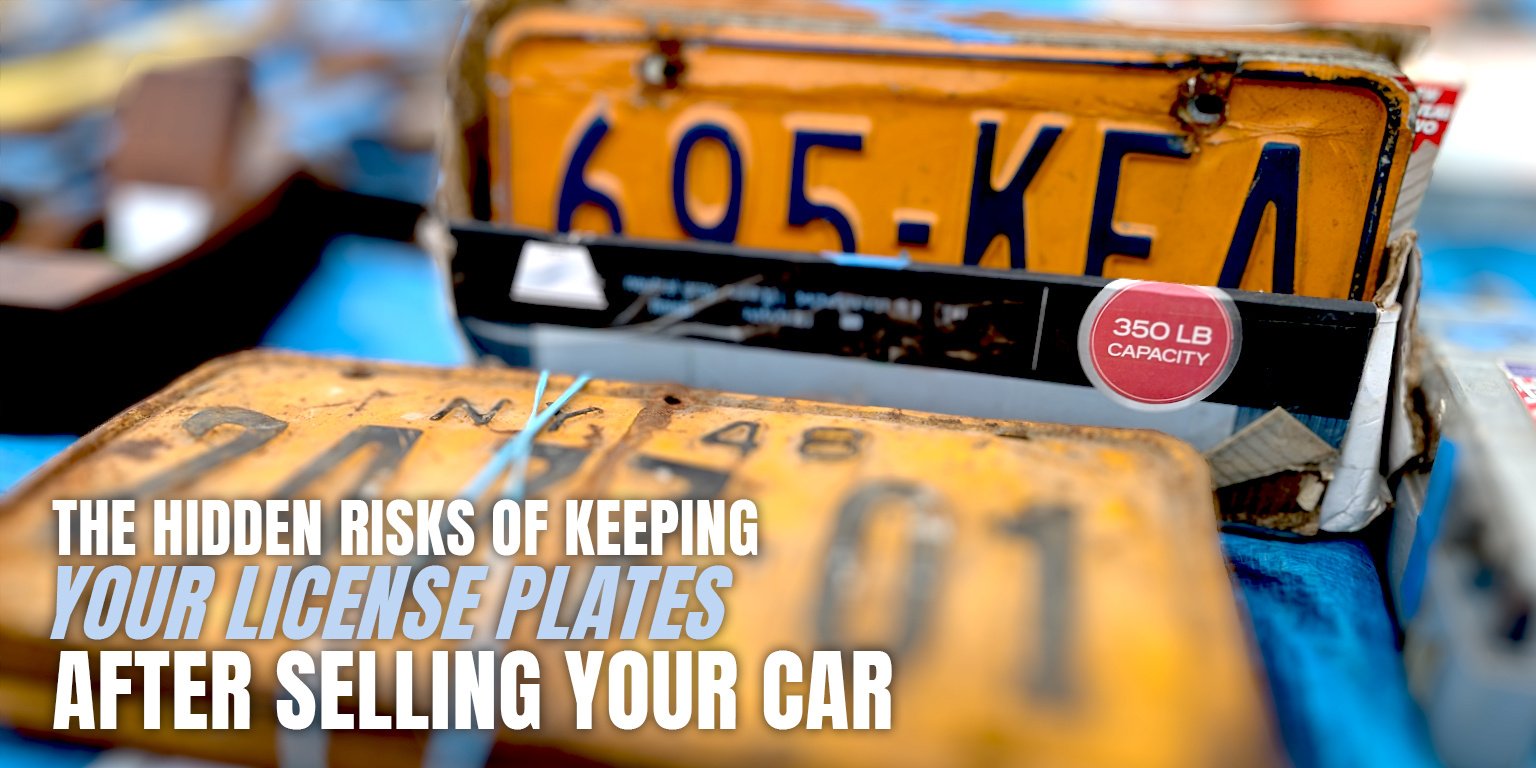
When a vehicle is declared a total loss and you don't retain it, surrendering your license plates to the New York DMV is important. Plates left active on a vehicle you no longer own — or a vehicle that's been totaled — can create unnecessary fees and administrative complications.
If you do retain the vehicle, your current registration becomes invalid once the salvage title is issued. You'll need to go through the rebuilt title inspection and then re-register the vehicle before it can return to the road.
Avoiding a Coverage Lapse on Your Replacement Vehicle
One detail that catches people off guard: when your totaled vehicle's coverage ends, you need to make sure there's no gap before you're driving a replacement. New York requires continuous coverage, and policies vary on how replacement vehicles are handled — the window to add a replacement before coverage lapses differs by carrier and policy, so confirm that timeline with your agent before you finalize a purchase.
Canceling coverage on the totaled vehicle without coordinating that timing with your replacement purchase can create a lapse on your record, which affects future rates. Our article on removing a vehicle from your policy walks through the right way to handle that transition.
Retaining a Totaled Vehicle Is a Legitimate Option — With Real Steps
Keeping a totaled vehicle is something New York law allows, but it comes with a process most people don't fully anticipate when they make the decision. Skipping steps — driving the vehicle before it passes inspection, failing to obtain a rebuilt title, or letting registration lapse — can result in driving unregistered and uninsured, which carries its own legal and financial consequences.
The rebuilt title status, the carrier restrictions that often follow, and the permanent effect on resale value are all worth understanding before you sign anything with the insurer.
If you're working through coverage questions about a rebuilt vehicle, the Horan insurance agency can discuss what your policy includes and how different carriers approach rebuilt title vehicles.
Click the Get a Quote button below to reach our team.

Topics: