
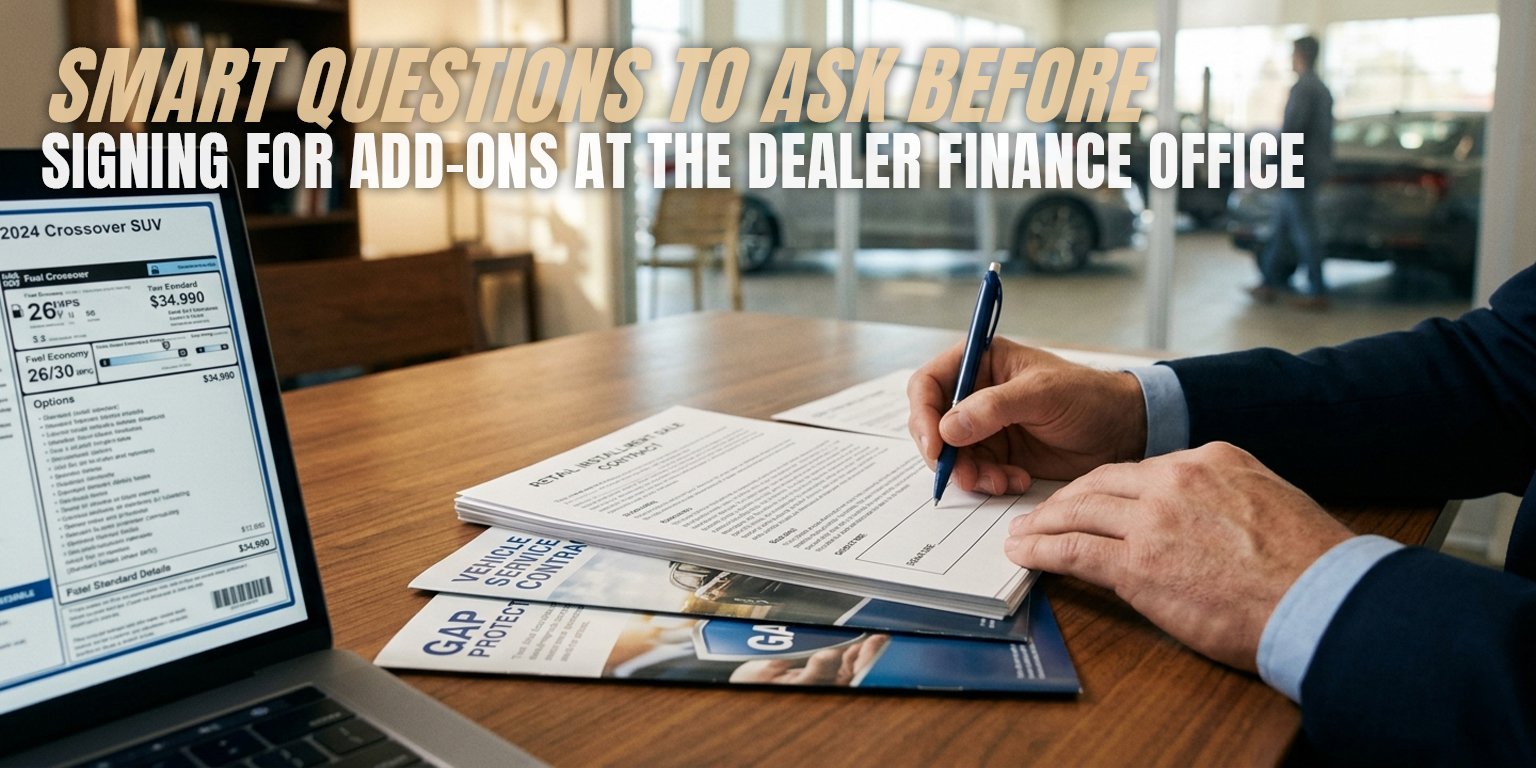
You found the vehicle. You agreed on a price. Then you're sitting in the finance office watching a long list of add-on products land in front of you — extended service contracts, gap coverage, tire-and-wheel plans, key replacement, prepaid maintenance — each one with a pitch and a price rolled into the loan.
The pace of that moment is by design, and signing without a clear sense of what each product does (or duplicates) is how Central New York buyers end up paying for coverage they didn't want or didn't need.
At the Horan insurance agency, we work with several carriers and talk with Central New York drivers every day about what their auto policy already covers and what it doesn't. That perspective lets us share information you can carry into the dealership so the finance office moment is a conversation instead of a scramble.
In this article, we'll walk through the questions worth asking before you sign — questions about overlapping coverage, gap, extended service contracts, cancellation rights under New York law, and how rolling add-ons into the loan changes the math.
Common Add-Ons You're Likely to See in the Finance Office
Before the questions, here's what's typically on the menu:
- Extended service contracts (sometimes called extended warranties)
- Gap coverage
- Tire-and-wheel protection plans
- Key replacement
- Prepaid maintenance
- Paint, fabric, or undercoating treatments
Some have value for some drivers. Others overlap with coverage on your existing auto policy. The questions below help separate the two.
Questions Worth Asking Before You Sign
A few direct questions can shift the dynamic in the finance office from sales pitch to informed conversation. Here are the ones that tend to surface the most useful answers.
Is This Already Covered by My Auto Insurance Policy?
Some add-ons echo coverage that may already exist on your personal auto policy. Roadside assistance, towing, rental reimbursement, and certain glass coverages are common examples. Before agreeing to a redundant product, it helps to know what your current policy already includes. Our guide to auto insurance in Central New York walks through the standard coverages a New York policy typically contains.
Do I Actually Need Gap Coverage on This Loan or Lease?
Gap coverage pays the difference between what you owe and what the vehicle is worth if it's declared a total loss. It matters most when the loan balance exceeds the vehicle's value — common with low down payments, long loan terms, or leases.
A hypothetical Liverpool buyer financing a new vehicle over 84 months with little money down could easily owe more than the vehicle is worth in year one.
Whether the dealer's gap product is the appropriate choice depends on price, terms, and how it compares to gap available through an auto insurer. For background, see our articles on gap insurance basics and gap coverage for leased vehicles.

Is the Extended Service Contract My Only Option for Repair Coverage?
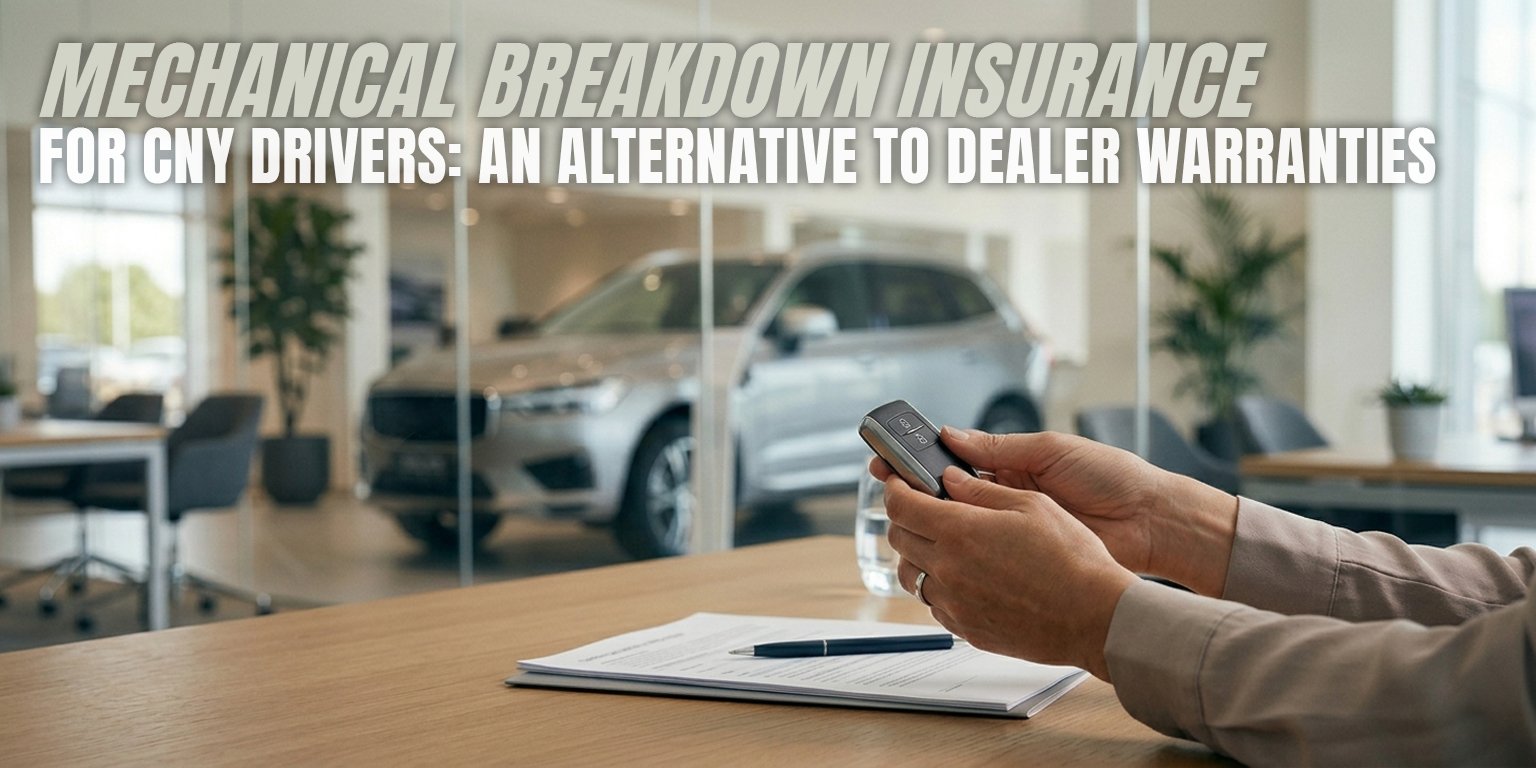
Dealer-sold extended service contracts are one way to cover mechanical repairs after the manufacturer warranty ends. They aren't the only way. Mechanical breakdown coverage from an auto insurer is a separate product worth comparing — sometimes lower in cost, sometimes different in scope. Our article on mechanical breakdown coverage as an alternative to dealer warranties lays out the comparison.
What Are My Cancellation Rights Under New York Law?
This is the question most buyers forget to ask. New York's Insurance Law (Article 79) gives buyers of a motor vehicle service contract a statutory window to return the contract for a full refund if no claim has been made. The exact length is set by the contract itself, with a statutory minimum.
The law also addresses what happens if the provider is slow to issue a refund. Ask the finance manager to point to the cancellation language in writing, and read it before you sign.
Should I Finance These Add-Ons, or Pay Differently?
Rolling add-ons into the loan means paying interest on them for the life of the loan. A hypothetical Syracuse buyer adding $3,000 in add-on products to a 72-month loan at 8% would pay several hundred dollars in interest on those products alone.
Some add-ons can be purchased later, outside the finance office, or paid for separately. Asking about payment options gives you a clearer picture of the true cost.
What Happens to This Coverage If I Sell or Pay Off the Vehicle Early?
Service contracts often allow prorated refunds if you sell the vehicle or pay off the loan early. The terms vary by contract. Gap coverage usually ends when the loan is paid.
Knowing the answer in advance shapes whether the product makes sense for how long you actually plan to keep the vehicle. Our article on full coverage decisions for a paid-off car touches on related considerations.
Walk In Prepared, Sign with Composure
The finance office runs on momentum. A short list of questions interrupts that momentum just long enough for you to think. Some add-ons will serve you well; others may duplicate what you already carry or cost more than they should — and the difference between those two categories isn't always obvious in the moment.
The Horan insurance agency works with Central New York drivers as a resource for understanding what an auto policy already covers, how dealer-sold products compare to coverage from an auto insurer, and what questions to bring into the dealership. We work with several carriers, which lets us share a wider view than any single product can offer.
Click the Get a Quote button below to start a conversation about what your auto policy covers before your next trip to the dealership.

Topics: