
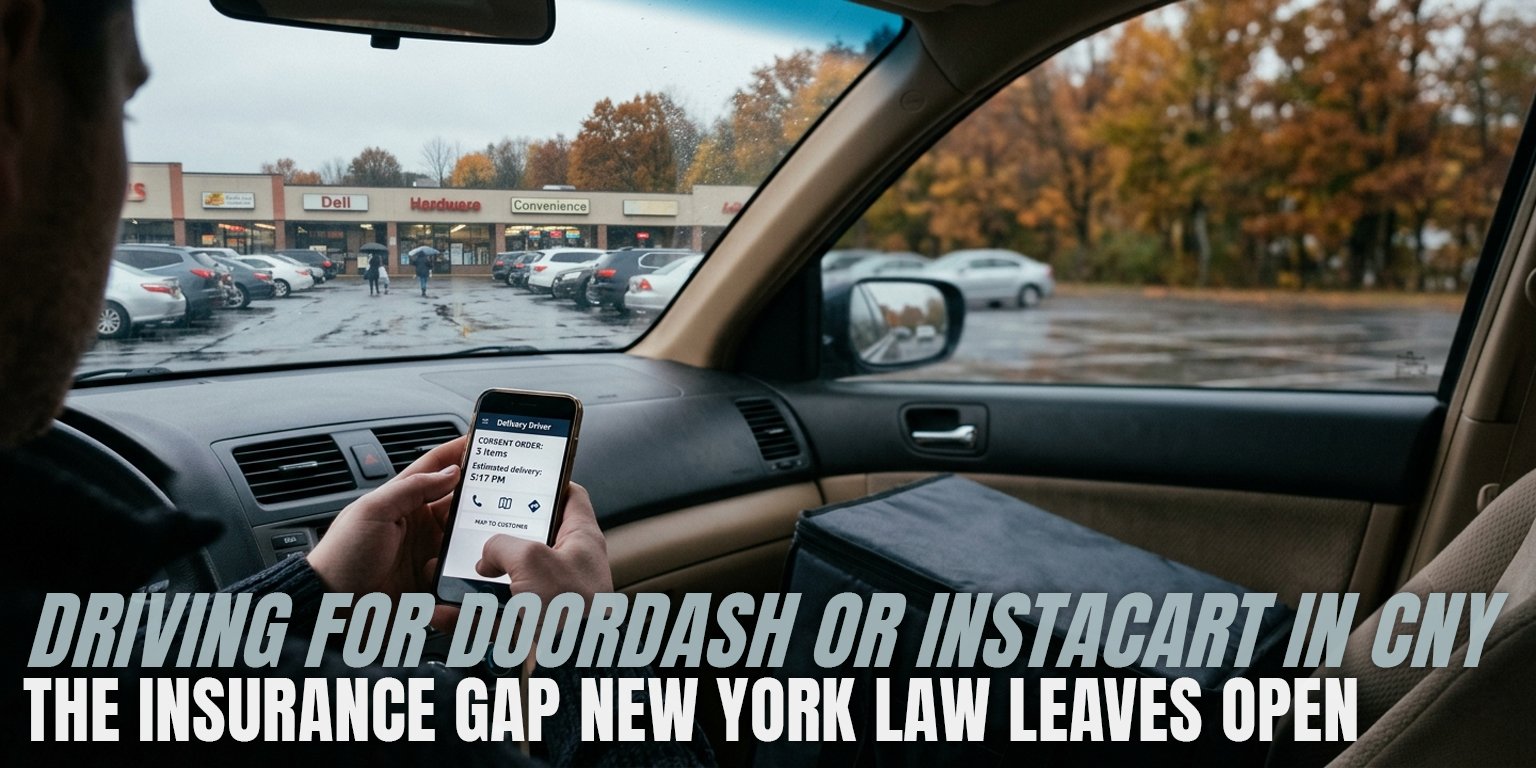
You signed up to deliver for DoorDash, Instacart, Grubhub, or Amazon Flex to earn extra income on your own schedule. The work seems straightforward — drive, drop off, get paid. What few drivers realize until after an accident is that the insurance picture for food and parcel delivery in Central New York looks nothing like the one for Uber and Lyft drivers.
At the Horan insurance agency, we help Central New York gig drivers think through coverage decisions before a claim exposes a gap. We work with several carriers in the region and can walk you through how different policies address — or don't address — delivery work.
In this article, we'll explain why New York treats delivery drivers differently under state law, where the coverage gap shows up during a typical delivery run, and the endorsements and policy notations that can help close it.
How CNY Delivery Drivers End Up Without Coverage While the App Is On
The starting point is a regulatory distinction many drivers don't know exists. New York wrote one set of insurance rules for app-based ridesharing — and food and parcel delivery sit outside that framework. That single point of law shapes how a delivery claim gets handled in Syracuse, Liverpool, Cicero, or anywhere else in our region.
New York's Ridesharing Law Doesn't Apply to Food Delivery
Article 44-B of the New York Vehicle and Traffic Law defines a Transportation Network Company as an entity that connects passengers to drivers for prearranged trips. Uber and Lyft fit that definition. DoorDash, Instacart, Grubhub, and Amazon Flex do not, because they move food and goods, not passengers.
The consequence for drivers is concrete. Uber and Lyft drivers in Central New York operate under a state-mandated insurance framework that sets minimum coverage during each phase of a trip. Delivery drivers have no equivalent framework, which is what leaves the gap this article addresses.
Where the Gap Lives During a Delivery Run
A typical delivery run involves three phases, and the coverage picture changes at each one:
- App on, no delivery accepted. Most New York personal auto policies contain a livery or commercial-use exclusion that can apply once you begin operating the vehicle to make deliveries. Delivery platforms generally provide no coverage during this phase.
- En route to pick up the order. DoorDash and Amazon Flex extend platform coverage in some form once a delivery is accepted, though the exact trigger point is defined by the platform's policy, not by state law. Grubhub and Instacart provide no auto coverage to their drivers.
- Carrying the order to the customer. DoorDash offers excess third-party liability up to one million dollars while a driver is in active delivery, but that policy sits behind the driver's personal auto policy. According to Amazon's published terms, the Amazon Flex commercial auto coverage is not available to drivers in New York.
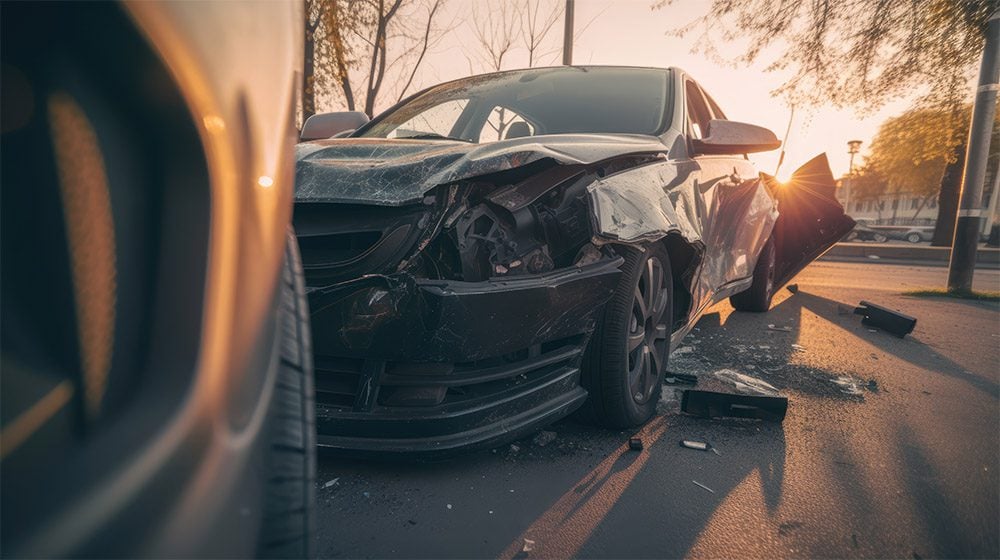
Imagine a hypothetical driver logged in to Instacart in a Camillus parking lot, waiting for an order. A distracted driver rear-ends them. The personal auto carrier may deny the claim under the commercial-use exclusion, and Instacart does not currently provide auto coverage to its shoppers. That driver carries the loss.
Endorsements and Coverage Notations That Can Close the Gap

Closing the gap starts with a conversation with your carrier — and getting the answer in writing. A few options New York drivers should ask about:
- A rideshare or delivery endorsement added to the personal auto policy. Availability in New York varies by carrier, and some endorsements cover ridesharing but not food or parcel delivery. Read the endorsement language before assuming it applies.
- A business-use classification on the personal auto policy that discloses the delivery activity. This is not the same as a commercial auto policy, and it may not be available for high-mileage delivery work.
- A commercial auto policy when delivery becomes the primary use of the vehicle. Carriers generally draw a line based on frequency and miles driven for hire.
Whichever path fits, the goal is the same: a written record that your carrier knows about the delivery work and has agreed to insure around it. A verbal "you're probably fine" from anyone is not coverage.
For more context, see our related articles on the
- rideshare coverage gap for Uber and Lyft drivers,
- the difference between business use and commercial use, and
- personal auto coverage for vehicles used for work.
Close the Gap Before a Claim Finds It
A delivery accident is a difficult moment to learn that two policies — your personal one and the platform's — both point at each other. Drivers who sort out the coverage question in advance can drive with more composure. Drivers who don't may carry the loss themselves.
The Horan insurance agency works with Central New York gig drivers to read the actual policy language, identify where the gap sits for their platform mix, and discuss endorsement or commercial options available in our market. We'd like to serve as a resource you can call before the next change in your driving pattern, not after a claim.
Click the Get a Quote button below to start a conversation about delivery driver coverage that fits how you drive day to day.

Topics: