
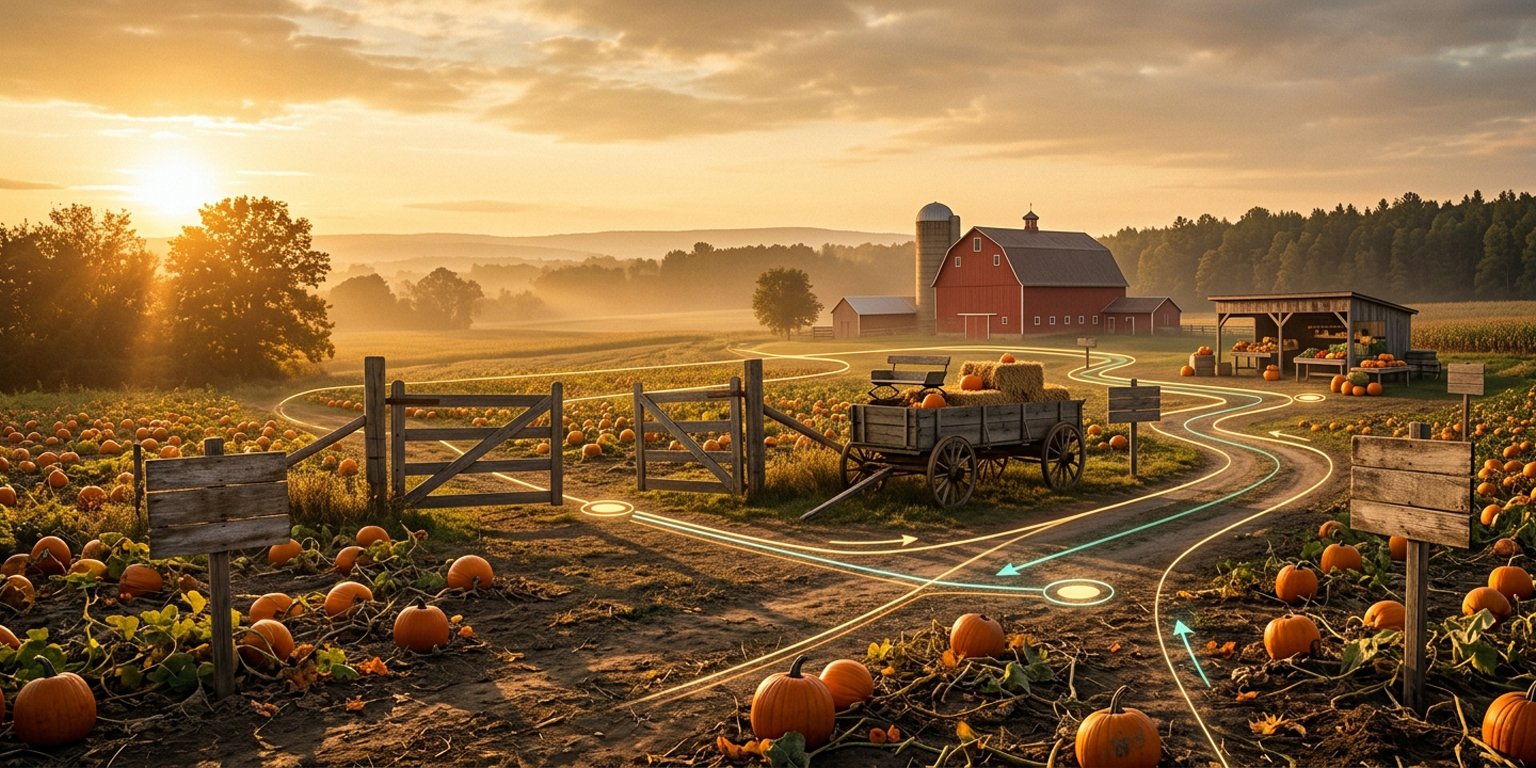
You’ve opened the gate to a pumpkin patch, farm stand, or corn maze, and strangers are walking your fields. Few farm owners have an insurance background, so wondering whether your policy still fits is natural. The worry isn’t just a claim. It’s learning after an injury that the policy fits a different kind of farm.
At the Horan insurance agency, we’re an independent agency working with multiple carriers across Central New York. That gives us an informed view of how coverage options compare for farms that welcome visitors, which an agency tied to one carrier may not have.
This article covers how your policy may treat visitors, what New York’s Safety in Agricultural Tourism Act asks of operators, and what to tell your agent before opening day.
Does a Homeowners or Farm Policy Cover Visitors to a Farm?
It may not. Homeowners and farm policies can exclude or limit business activities, and a farm that charges admission or runs attractions may cross that line. Forms vary by carrier, so your policy’s wording decides the answer.
Our article on home-based businesses and homeowners insurance explains the business exclusion concept.
What Changes When a Central New York Farm Opens to the Public?
Strangers replace family and employees on your ground, and each activity you add can raise its own coverage question. Visitors cross uneven rows, meet animals, ride wagons, and eat food your farm sells.
Suppose a family farm near Baldwinsville adds a pumpkin field, a wagon ride, and a cider stand. A visitor trips in a furrow and breaks a wrist. The owner then asks whether the homeowners policy responds, and whether the ride or the food sales change the answer. Those questions are easier to settle before the season.
What Does New York’s Safety in Agricultural Tourism Act Ask of Operators?
The Act asks operators to meet five conditions, and following them can limit an operator’s liability for a visitor’s injury or death. Article 18-B of the General Obligations Law, Sections 18-301 to 18-303, dates to October 23, 2017. It isn’t insurance, and it doesn’t decide how a policy responds.
Section 18-302 defines agricultural tourism as activities a farmer conducts on the farm with a main purpose of promoting the sale, marketing, production, harvesting, or use of farm products. The definition doesn’t name corn mazes, pick-your-own produce, or hayrides, so this article doesn’t say whether any one of them qualifies.
Section 18-303 lists these conditions:
- Wayfinding signage
- Training for employees involved in the activities
- A conspicuous “Warning to Visitors” at every point of sale or ticket distribution, plus written information in text the Department of Agriculture and Markets specifies
- A notice of visitor responsibilities
- Reasonable care to prevent foreseeable risks, plus a posted refund notice
The Department cautions that generic signs, or signs written for other states, may not satisfy the statute. It also notes that the statute doesn’t define “inherent risk.”
Failing to disclose a foreseeable risk or use reasonable care could cost an operator that limit on liability. This article isn’t legal advice, so confirm how the statute applies to your farm with an attorney.
 Which Coverages May Apply to a Farm With Visitors?
Farm or general liability, umbrella liability, product liability for food, workers’ compensation for seasonal staff, and property coverage may each apply, depending on your activities.
Our general liability insurance guide covers premises liability, and commercial umbrella insurance explains the extra limits that may sit above it. For food sold on the farm, see our overview of product liability for retailers.
The Workers’ Compensation Board’s farm guidance says all farms with employees must carry workers’ compensation insurance. Our explainer on New York workers’ compensation covers the basics.
What Should You Tell Your Agent Before Opening to Visitors?
Tell your agent every activity, season, and charge before the first visitor arrives, and ask whether an endorsement or a separate liability form addresses them. Policy wording often turns on those details. Bring answers to these questions:
- Which activities will you offer, such as pick-your-own, tours, or wagon rides, and in which months?
- Will you charge admission?
- Will visitors meet animals?
- Will you sell food made or packaged on the farm?
- How many employees and seasonal workers will you have?
- Will you host events, such as a barn wedding? Those can raise separate questions, and our guide to special event liability insurance covers them.
- What signage and training records do you keep?
Settling Visitor Coverage Questions Before Opening Day
We covered how a homeowners or farm policy may limit visitor activity, what the Safety in Agricultural Tourism Act asks of operators, and which coverages may apply. Opening a farm to the public takes real effort, and policy questions shouldn’t add to the strain. Busy weekends leave little time for policy wording, so the questions belong in the quiet months.
An owner who asks before the season can open with composure and stability, knowing what the policy says about each activity. Skip the questions, and the first answer may come in a claim letter.
As an independent agency working with multiple carriers across Central New York, the Horan insurance agency would like to be a resource. We can review your policy wording with you, compare options from multiple carriers, and point out questions to raise. We can’t say what any carrier will offer.
Click the Get a Quote button below to start that conversation.

Topics: