
A brewery taproom looks like a bar from the customer's side of the counter — pours, tabs, the same standard on-premise experience. Assuming the existing playbook for bar and tavern liquor liability applies wholesale is where the line blurs, since the business behind the counter also manufactures what's being served.
At the Horan insurance agency, we work with multiple carriers across Central New York, and breweries raise a liquor liability question a straight bar policy was never built to answer.
This article looks at what stays the same between a taproom and a bar, what changes once manufacturing enters the picture, and where this coverage stops.
Is a Brewery Taproom's Liquor Liability the Same as a Bar's?
Largely, yes, for the pour side of the business. A taproom serving on-premise carries the same core exposure as a bar or tavern — a customer served alcohol who later causes harm to themselves or someone else.
Our Bar and Tavern Liquor Liability Insurance for CNY Businesses article covers the shared ground in depth. A taproom weighs the same questions:
- Whether liquor liability sits as a standalone policy or an endorsement on a broader business policy
- What limits and deductibles fit the taproom's own hours, crowd size, and pour volume
- Whether assault and battery coverage is worth adding, given the taproom's own risk profile
What Changes Once a Business Also Manufactures the Product It Serves?
The starting point for a brewery's liquor liability is generally different because the underlying New York State liquor license is different. A brewery typically holds a manufacturer's or farm brewery license permitting on-premise tastings, rather than a standard on-premises license built for a bar.
That distinction can affect how a carrier writes and rates the liquor liability piece, even when the day-to-day serving looks identical to a bar's. A conversation with a licensed agent familiar with manufacturer-held licenses is generally the fastest way to confirm how a specific brewery's license type affects its options.
 Does Liquor Liability Extend to the Brewing and Production Space?
No, not directly. Liquor liability follows what happens where alcohol gets served, not where it gets made — the production side of a brewery is generally a property and general liability question instead.
Many CNY breweries operate the taproom and the brewhouse as one combined location; some run them as two. Either way, the production space's insurance needs sit outside the liquor liability conversation this article focuses on.
What About Beer That Leaves the Building?
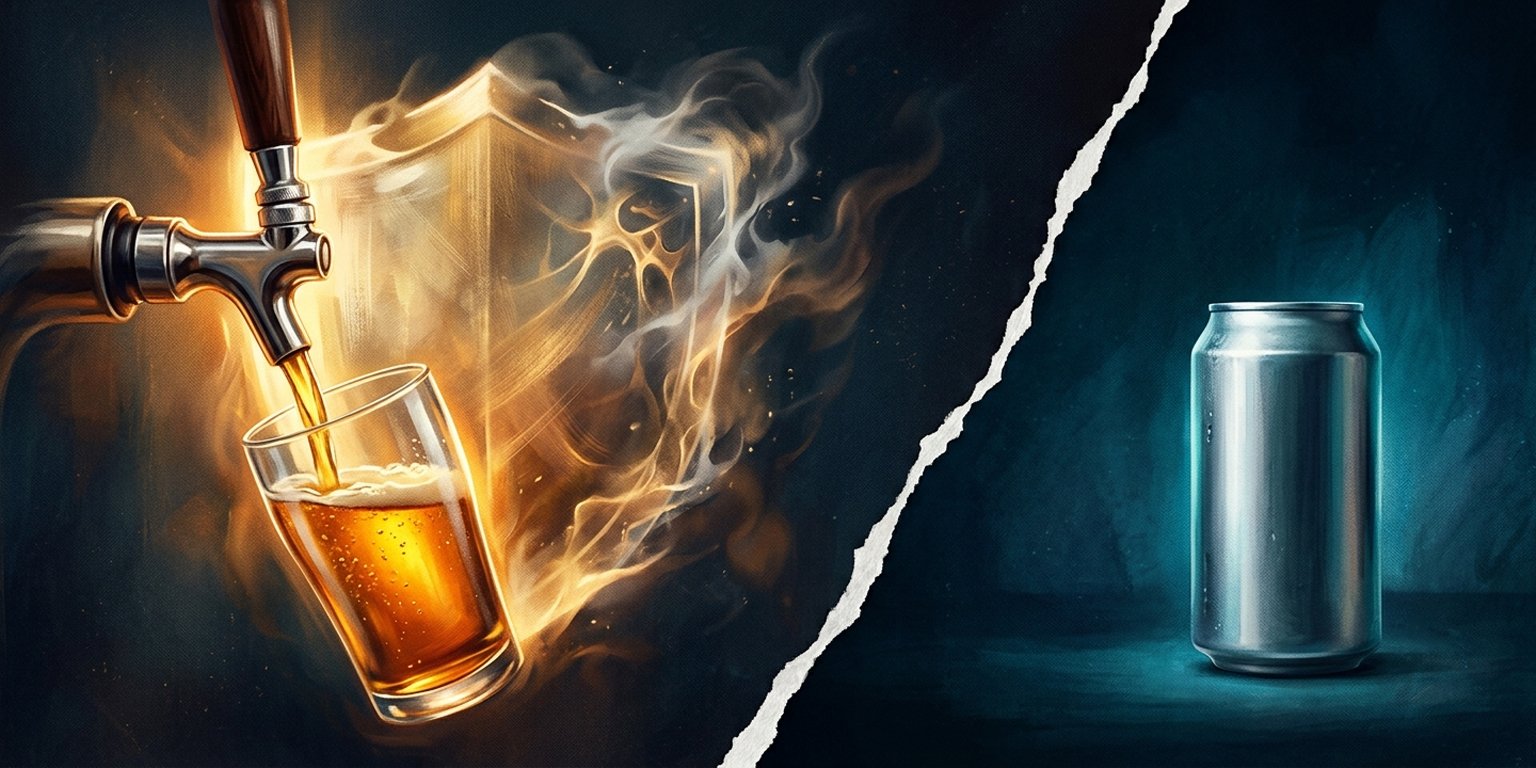
Liquor liability stops at the taproom door. Once a can or bottle leaves the premises and gets sold somewhere else, the exposure shifts from serving alcohol to the product itself — a separate question from what this article covers.
A hypothetical example: a farm brewery outside Cazenovia self-distributes cans to a handful of CNY retailers. If a customer at one of those stores has an issue with a can bought off a shelf, miles from the taproom, that's a product-side claim, not a liquor liability one. Our How Product Liability Insurance Offers Essential Business Coverage in CNY article covers that exposure in more detail.
Ready to Review a Brewery or Taproom's Liquor Liability Coverage?
A taproom's liquor liability needs sit closer to a bar's than a restaurant's, but the manufacturing side of the business means the underlying license and rating picture aren't identical. Treating the two as interchangeable is where a brewery owner risks missing something a generic bar comparison wouldn't catch.
As an independent agency working with multiple carriers across Central New York, the Horan insurance agency can help sort through how a specific taproom's license and operation are likely to affect its liquor liability options.
Click the Get a Quote button below to start that conversation.

Topics: