
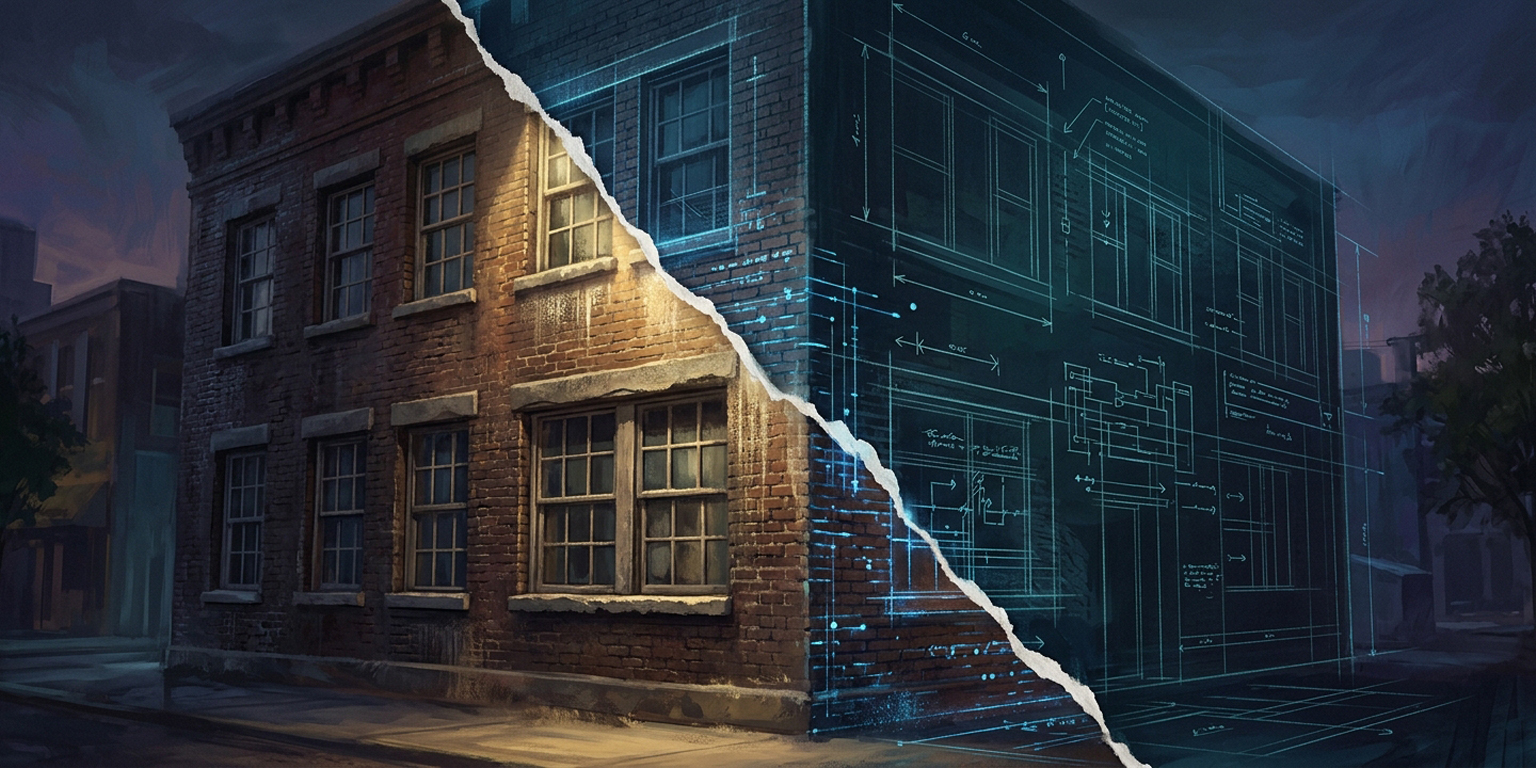
You want to know your commercial property policy will rebuild what you lose, not leave you guessing about what it actually pays for. Without insurance experience, it's hard to know whether your policy accounts for a building code requirement that shows up only after a loss.
Your worry probably isn't the loss itself — it's discovering that the policy you signed isn't quite right for what your building would actually need to rebuild.
At the Horan insurance agency, we work with multiple carriers across Central New York. That gives us a view of how ordinance or law endorsements compare from one commercial property policy to the next.
This article walks through what commercial ordinance or law coverage adds, what triggers it, and where it fits alongside the other coverage decisions on your policy.
What Triggers the Building Code Gap in a Commercial Property Claim?
Current code requirements can force a bigger rebuild than your original structure once a covered loss happens. A commercial building typically stays grandfathered under the code in place when it was built, even as local codes change over the years.
That grandfather status holds until a triggering event forces the building into compliance with current code — usually a covered loss that requires repair or rebuild. That's the moment ordinance or law coverage starts to matter, and it's also the moment many owners learn their standard policy wasn't built to absorb that cost.
What Are the Three Parts of Commercial Ordinance or Law Coverage?
Ordinance or law coverage could provide three distinct types of coverage once a covered loss triggers a code-driven rebuild. It's commonly added through an endorsement like the ISO CP 04 05 form or a carrier-equivalent, and it typically breaks into three components:
- Coverage A may address the loss in value of the undamaged portion of a building that current code requires to come down anyway — for example, a partial loss where code won't allow a partial rebuild.
- Coverage B may address the cost to demolish that undamaged portion.
- Coverage C may address the increased cost of construction to rebuild to current code, above what a like-kind-and-quality rebuild would've cost.
Each component typically carries its own sub-limit. A commercial property policy without this endorsement often caps this exposure at a modest flat amount or a small percentage of the building limit. Carrier forms vary enough on this figure that it's worth confirming your specific policy's number rather than assuming a standard one applies.
Why Does This Coverage Gap Carry More Weight for Older CNY Buildings?
Age raises the odds that more of a building predates the code it would need to meet today, but the exposure isn't only about square footage. Older CNY buildings often carry original wiring, plumbing, or structural framing that current code addresses directly — points a newer building simply doesn't have.
An older downtown storefront, a converted mill building, or a renovated residential structure now used commercially carries more of that exposure than a newer building built to today's standards from the start.
Picture a hypothetical CNY business in an older storefront in a downtown corridor like Syracuse, Oswego, or Fulton. Aging electrical service throughout the building means a kitchen fire on one side triggers a code-mandated rewiring requirement for the whole structure, not just the section that burned.
That's the kind of code-driven cost that has little to do with the size of the fire and everything to do with what the building was built with.
What Does Commercial Ordinance or Law Coverage Not Cover?
This endorsement addresses code-driven costs tied to a covered loss, not general upgrades you choose on your own. It typically doesn't extend to:
- Voluntary renovations or upgrades unconnected to a covered loss
- Damage from a peril your policy doesn't cover in the first place — if the underlying loss isn't covered, ordinance or law coverage doesn't independently step in
- Equipment breakdown-type failures that aren't tied to a covered property loss
 How Does Ordinance or Law Coverage Fit With Your Other Commercial Property Decisions?
This endorsement is a limit decision that works alongside — not instead of — getting your building's replacement cost value right and understanding how your policy's co-insurance requirement works.
Our article on the coinsurance clause and how it can affect your claim payout covers that requirement in more depth, and our piece on why insuring a building for actual cash value isn't cheaper walks through the valuation side.
If you're weighing construction type as part of that valuation picture, our guide to lessor's risk insurance for CNY commercial property owners is a useful next stop. Our article on insuring a small commercial building beyond lessor's risk covers several related coverage gaps small property owners run into.
If you want to see how this same coverage concept works differently on the residential side, our article on ordinance or law coverage for your CNY home policy breaks down that version. The numbers and structure there don't carry over to a commercial policy, so treat the two as related but separate decisions.
Confirming Your Ordinance or Law Coverage Before a Loss Forces the Question
We covered how ordinance or law coverage works, what triggers it, and why older CNY buildings tend to carry more of this exposure than newer ones. A policy without this endorsement, or one with a limit set years ago, may leave a real gap between what a covered loss pays out and what current code actually requires to rebuild.
As an independent agency working with multiple carriers across Central New York, the Horan insurance agency can help you explore whether your ordinance or law limit lines up with your building's age and construction.
Click the Get a Quote button below to talk with a licensed agent about your commercial property coverage.

Topics: